Remember when your skin could handle just about anything you threw at it? Those days when bar soap and random lotion seemed to work just fine? Yeah, those days are long gone for most of us. As we age, our skin starts sending out distress signals that are harder and harder to ignore—dryness that won’t quit, fine lines that seem to deepen overnight, and a moisture barrier that’s basically thrown in the towel. Here’s the thing: finding the right moisturizer for mature skin isn’t just about hydration anymore. It’s about choosing formulas that work with your skin, not against it. And if you’re like the growing number of people who care about what they’re putting on their skin (hello, clean beauty movement), you’re probably wondering which moisturizers can deliver real anti-aging results without the questionable ingredients. Let’s cut through the noise and talk about what actually works.
What Is a Clean Moisturizer for Aging Skin?
Clean beauty has become quite the buzzword, hasn’t it? Walk into any beauty store and you’ll see “clean,” “natural,” and “non-toxic” plastered everywhere. But what does it actually mean?
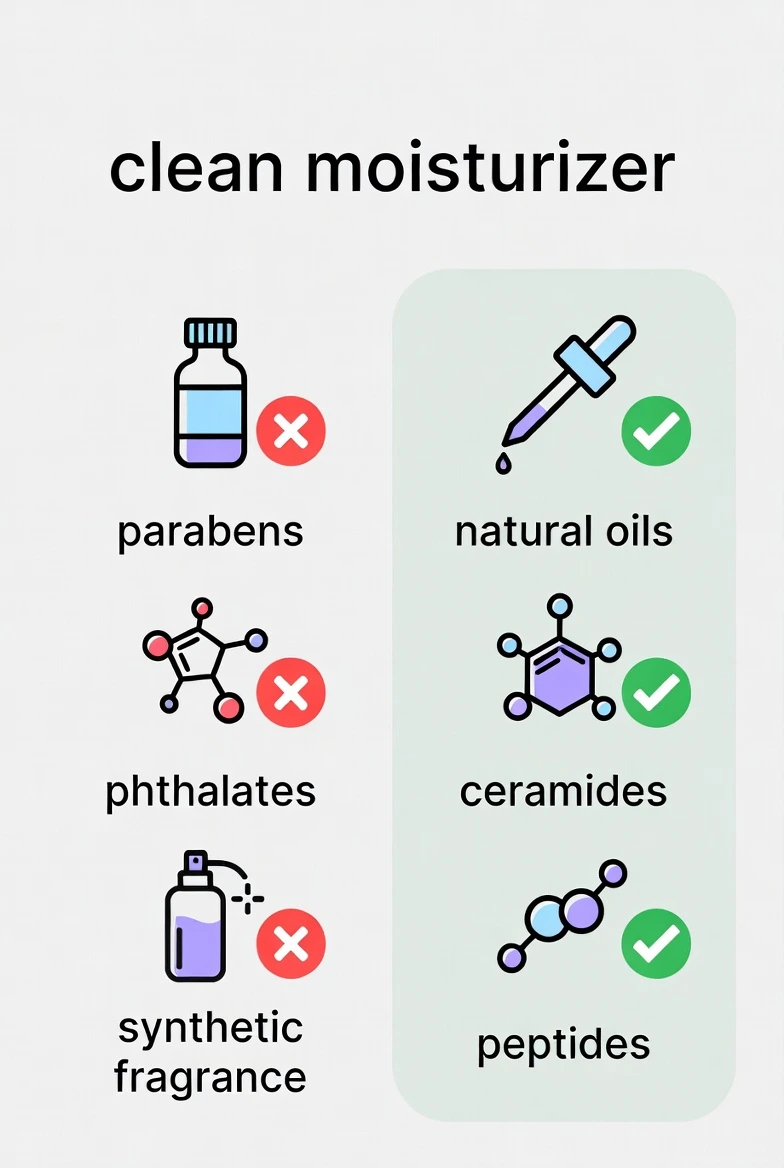
Clean beauty products are made without ingredients shown or suspected to harm human health, avoiding chemicals like parabens, phthalates, PEGs, and synthetic fragrances. Think of it as beauty products that prioritize both your health and results—formulas created without the ingredient red flags that keep popping up in research studies.
For aging skin specifically, a clean moisturizer should deliver on two fronts: safety and performance. It needs to provide the deep hydration, barrier repair, and anti-aging support your mature skin craves, but without potentially harmful additives. No compromise required.
The best part? Clean doesn’t mean less effective. Many clean formulas actually outperform traditional options because they focus on high-quality, skin-nourishing ingredients that your complexion can actually recognize and use.
Why Does Aging Skin Need a Clean Formula?
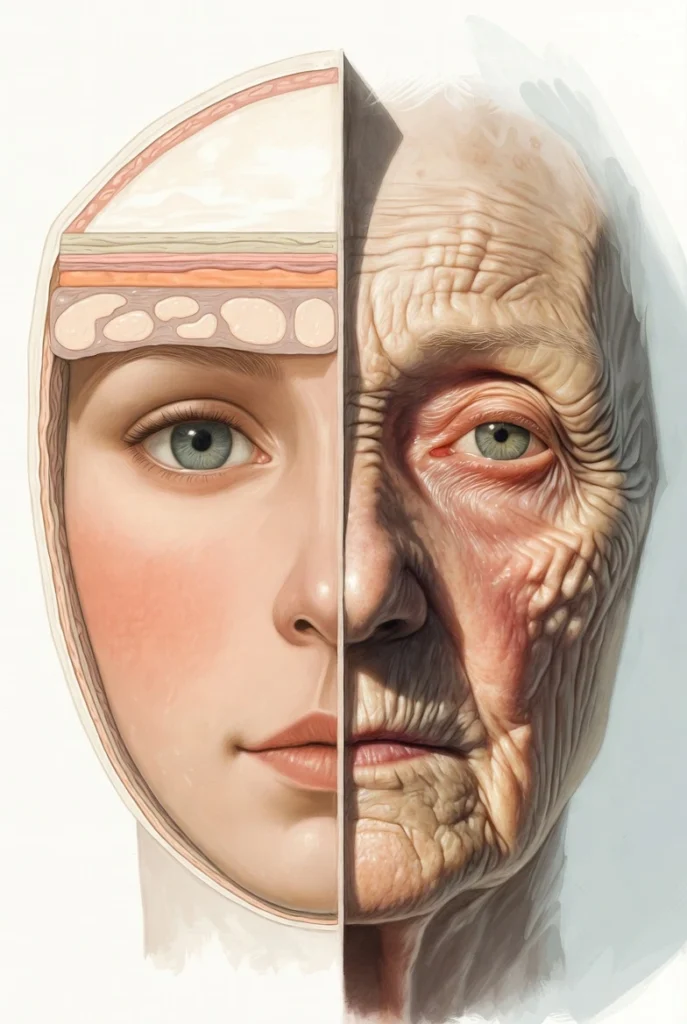
Your skin changes dramatically as you age, and not always in ways you’d choose. After 40, sebum production drops significantly, especially for women in menopause, making skin drier, more sensitive, and less able to maintain its moisture barrier. It’s like your skin forgets how to keep itself hydrated.
But here’s where things get interesting. Decreased estrogen means the skin becomes thinner, with the epidermis losing about 6.4% of its thickness every decade. Thinner skin is more vulnerable—to irritation, to environmental stressors, to potentially harmful ingredients that might have rolled off your back in your twenties.
This is exactly why clean beauty matters more as we age. When your skin’s natural defenses are compromised, the last thing you need is to add potentially irritating or toxic ingredients to the mix. Studies confirm that parabens mimic estrogen in the human body, with evidence linking them to reproductive organ harm, thyroid disruption, and hormone-related concerns. For skin that’s already dealing with hormonal changes? Not ideal.
Plus, mature skin has enough on its plate without fighting off synthetic fragrances, harsh preservatives, or other questionable additives. Clean formulas work with your skin’s natural processes rather than against them.
What Ingredients Should You Look for in a Clean Moisturizer?
Not all moisturizers are created equal, especially when you’re shopping for aging skin. Here’s what dermatologists and skincare experts consistently recommend:
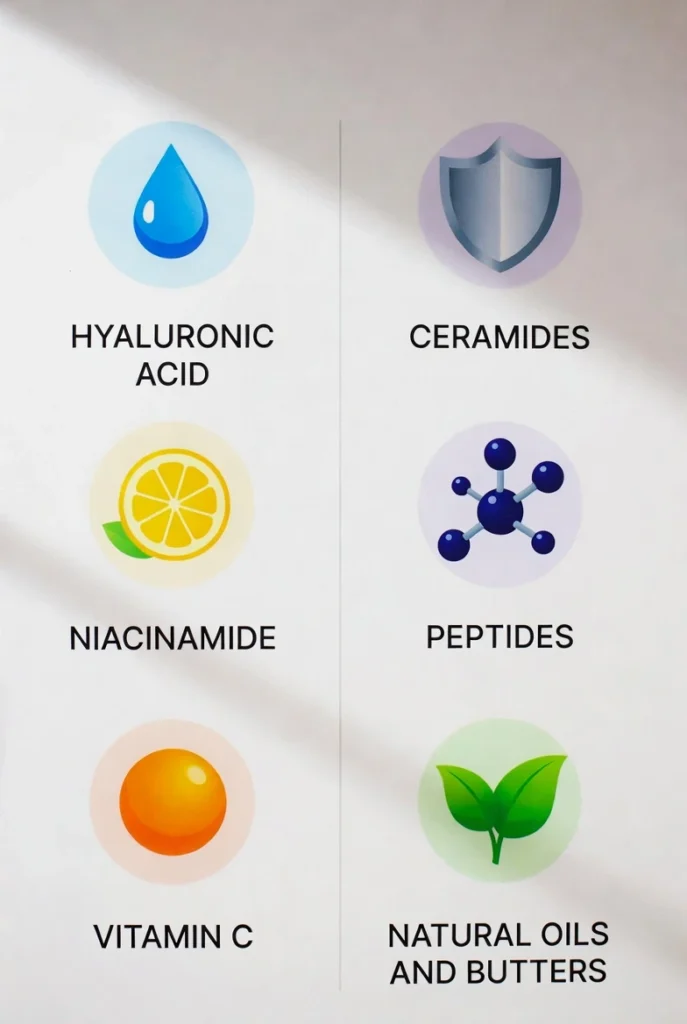
Hyaluronic Acid
This is the hydration heavyweight you absolutely need. Hyaluronic acid can hold up to 1,000 times its weight in water, acting like a molecular sponge that plumps skin with hydration from within. As we age, our natural production decreases, making topical application increasingly important.
Think of hyaluronic acid as your skin’s best friend—the one who shows up with water bottles when you’re dehydrated.
Ceramides
Ceramides help moisturize the skin and support the skin barrier, which becomes harder to maintain as hormone levels shift with age. They’re like the mortar between the bricks of your skin cells, keeping everything locked in place and protected.
Niacinamide (Vitamin B3)
This multitasker helps brighten skin, reduce inflammation, and support your moisture barrier. It’s gentle enough for sensitive skin but powerful enough to make a visible difference.
Peptides
These protein fragments signal your skin to produce more collagen. Collagen production decreases as we age, making peptides key in your routine for maintaining smoothness and firmness.
Vitamin C
Vitamin C is a powerful antioxidant that helps fight off free radicals and stimulate collagen production, fighting off signs of aging like wrinkles, hyperpigmentation, and roughness. Look for it in stable forms like ascorbic acid.
Natural Oils and Butters
Ingredients like jojoba oil, shea butter, rosehip oil, and squalane provide nourishment without synthetic additives. They mimic your skin’s natural oils while delivering vitamins and fatty acids.
What Ingredients Should Mature Skin Avoid?
Let’s talk about what you don’t want in your moisturizer. Your skin deserves better than these:
Parabens
These preservatives have been linked to hormone disruption—something you definitely don’t need when your hormones are already fluctuating with age.
Synthetic Fragrances
Fragrances are a common cause of allergic reactions, and dermatologists recommend choosing fragrance-free cosmetics, especially for sensitive skin. That “spa-like” scent isn’t worth the potential irritation.
Phthalates
These plasticizers are avoided in clean beauty due to their links to hormonal and environmental concerns. They’re often hidden in “fragrance” on ingredient lists.
Sulfates
These harsh cleansing agents can strip your skin’s natural oils—the opposite of what mature skin needs.
Denatured Alcohol
While some alcohols are fine (like fatty alcohols), denatured alcohol can be extremely drying and irritating to aging skin.
Formaldehyde and Formaldehyde-Releasing Preservatives
These are potential carcinogens that have no business in your skincare routine.
Best Clean Moisturizers for Aging Skin (Reviewed)
Let’s get to the good stuff—moisturizers that actually deliver results:
For Lightweight Hydration
If your skin feels greasy easily or you live in a humid climate, look for gel-cream textures with hyaluronic acid and niacinamide. These absorb quickly while still providing essential moisture and barrier support.
For Deep, Rich Moisture
Mature skin that’s very dry needs cream formulas with ceramides, peptides, and natural oils. The best moisturizers for mature skin contain humectants like hyaluronic acid and glycerin, emollients that fill cracks between skin cells, and ingredients that support the skin barrier.
For Combination or Sensitive Skin
Choose fragrance-free options with calming ingredients like centella asiatica, green tea extract, or oat extract. These soothe inflammation while providing balanced hydration.
For Night Treatment
Nighttime is when your skin does its repair work. Look for richer formulas with retinol alternatives (like bakuchiol for clean options), peptides, and antioxidants. Moisturizers can temporarily add fullness to skin, helping to reduce fine lines and wrinkles, which is especially beneficial overnight.
Best Face Balm for Mature Skin
Face balms have become the secret weapon for mature skin, and for good reason. These concentrated formulas pack serious nourishment in a small package.
What Makes Balms Different?
Cleansing balms use oils and emollients to melt away makeup and buildup without harsh scrubbing, and they’re formulated with ingredients like vitamin E, plant oils, shea butter, and ceramides that cleanse without stripping the skin. While cleansing balms serve a different purpose, facial treatment balms work similarly—delivering concentrated nourishment that melts into skin.
Best for Travel and Convenience
Solid face balms come in eco-friendly packaging and are mess-free for travel. They typically contain ingredients like jojoba oil, kokum butter, tamanu oil, and vitamin E to nourish and protect mature skin.
How to Use Face Balms
Warm a small amount between your fingertips until it melts slightly, then pat gently onto clean skin. Use them as your final skincare step to seal in moisture, or apply to particularly dry areas like around the eyes and mouth.
How to Choose the Right Clean Moisturizer for Your Skin Type
Not sure where to start? Here’s your decision-making framework:
Consider Your Skin’s Primary Concern
Is it dryness? Loss of firmness? Fine lines? Dark spots? Choose a moisturizer that addresses your biggest issue first. You can layer multiple products if needed, but start with your main concern.
Think About Texture Preferences
You might need different things from your moisturizer depending on how you use it—if you wake up feeling dry, consider a deep moisture-providing night cream, but for daytime hydration, consider a product with SPF.
Do you prefer lightweight gels or rich creams? Your morning and evening routines might use different textures. What works under makeup might be different from what feels good at bedtime.
Check the Ingredient List
Look for actives in the first five ingredients—that’s where you’ll find the highest concentrations. Watch out for “fragrance” listed without specifics, as this can hide questionable ingredients.
Patch Test First
Even natural ingredients can cause reactions. Test any new product on your inner arm for 24 hours before applying to your face.
How to Use Clean Moisturizer in Your Anti-Aging Routine
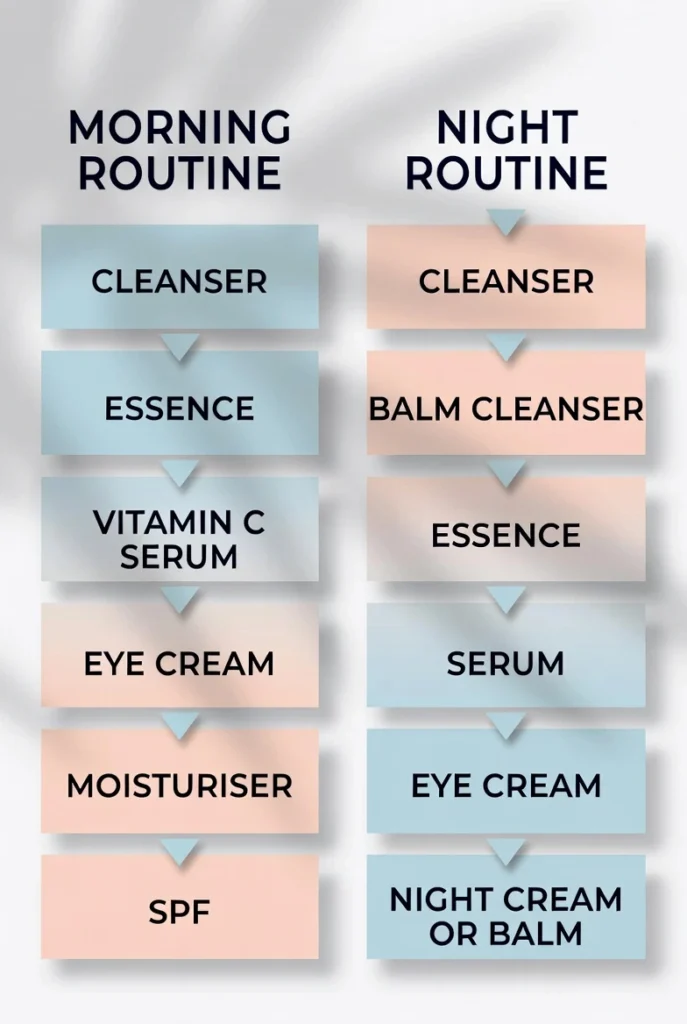
Sequence matters. Here’s how to layer your products for maximum effectiveness:
Morning Routine:
- Gentle cleanser
- Toner or essence (if using)
- Vitamin C serum
- Eye cream
- Moisturizer
- SPF 30 or higher (non-negotiable!)
Evening Routine:
- Cleansing balm or oil (first cleanse)
- Gentle cleanser (second cleanse)
- Treatment serum (retinol, peptides, or other actives)
- Eye cream
- Night moisturizer or face balm
Application Technique Matters
Apply moisturizer within three minutes after cleansing when skin is slightly damp, using gentle upward and outward strokes to prevent dragging skin downward and to stimulate lymphatic drainage. Think of it as giving your face a gentle lift with every application.
Pay special attention to areas that show age first—the lower cheeks, jawline, and neck. Your neck deserves the same care as your face.
Final Tips for Mature, Aging Skin
Hydration Starts from Within
No moisturizer can compensate for chronic dehydration. Drink plenty of water throughout the day—your skin will thank you.
Sunscreen Is Non-Negotiable
The single most effective anti-aging product? SPF. Every. Single. Day. Rain or shine, winter or summer. UV damage is cumulative and doesn’t take days off.
Be Patient with New Products
It takes about three months to see real results from most skincare products. Don’t give up after a week—give ingredients time to work their magic.
Less Can Be More
You don’t need a 15-step routine. A solid cleanser, good moisturizer, targeted treatment, and sunscreen can work wonders when chosen correctly.
Listen to Your Skin
What worked at 40 might not work at 60. Your skin’s needs change, and your routine should evolve with them. Don’t be afraid to switch things up.
The Bottom Line
Finding the best clean moisturizer for aging skin doesn’t have to feel overwhelming. Focus on products with proven anti-aging ingredients like hyaluronic acid, ceramides, peptides, and antioxidants—minus the questionable additives your mature skin doesn’t need.
Remember: aging is natural, but you get to decide how you want to care for your skin along the way. Clean beauty isn’t about perfection or turning back time—it’s about choosing products that support your skin’s health while delivering real, visible results.
Your skin has been with you for every moment of your life. It deserves ingredients that honor that journey.
Related Articles:
- Best Moisturizer for Aging Skin
- Best Body Moisturizer for Aging Skin
- Best Vegan Moisturizer for Aging Skin
- Best Anti-Aging Moisturizer for Black Skin
- Best Cruelty-Free Face Moisturizer for Aging Skin
Have you found a clean moisturizer that works wonders for your aging skin? Share your experience in the comments below—we’d love to hear what’s working for you!