Your skin feels tight after applying a product that’s supposed to leave it dewy and plump. Sound like a setup for frustration? It is — and it’s one of the most common complaints people have when they first bring hyaluronic acid skin care into their routine. The ingredient has an almost legendary reputation, yet a surprising number of people use it in ways that actively work against them. The good news: every single one of these mistakes is fixable, and once you understand what’s going wrong, you’ll never make them again.
This article is a practical troubleshooting guide. We’ll cover the most frequent errors people make with hyaluronic acid (HA), why they happen, and the exact adjustments that turn frustrating results into genuinely glowing ones. If you want a deeper foundation on what HA actually is and how it functions inside the skin, start with our full guide on the benefits of hyaluronic acid for skin — then come back here to fine-tune your approach.
Quick Answer: Why Is Your Hyaluronic Acid Not Working?
If hyaluronic acid isn’t delivering the plump, comfortable skin you expected, the most likely culprits are: applying it to dry skin, skipping a sealing moisturizer on top, using the wrong molecular weight for your concern, or living in a low-humidity environment without compensating. Fix any one of these and you’ll notice a difference. Fix all of them and the results can be dramatic.
Mistake #1: Applying HA to Completely Dry Skin
Hyaluronic acid is a humectant (an ingredient that draws moisture toward itself from the surrounding environment). This is the key to understanding why applying it to dry skin often backfires. When there’s no moisture on the surface of your skin for HA to work with, the molecule does the only thing it can — it reaches inward and pulls water from the deeper layers of your dermis toward the surface, where it then evaporates into the air. The result? Skin that feels tighter and drier than before you started.
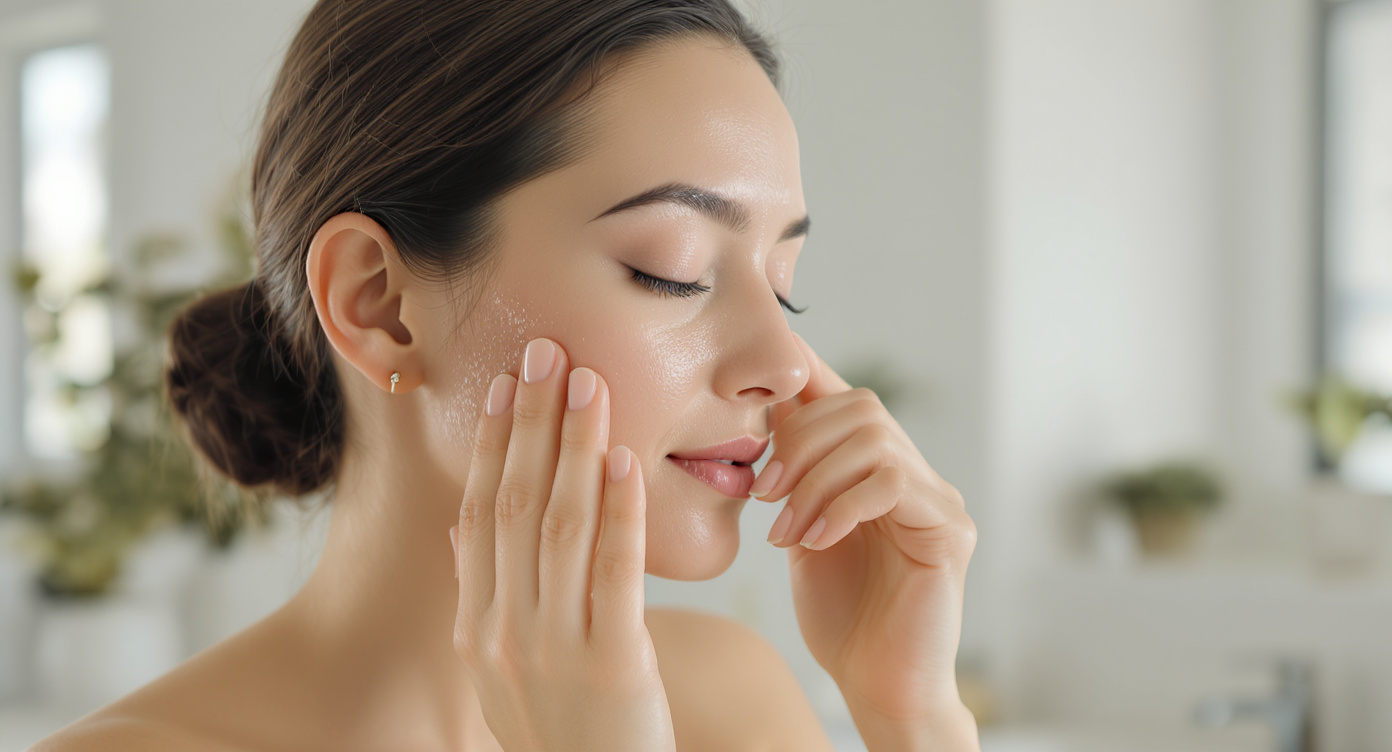
The fix is almost embarrassingly simple: apply your HA serum or moisturizer to damp skin. Right after cleansing, pat — don’t rub — your face until it’s about 70–80% dry, then immediately apply your HA product. That residual moisture gives the humectant something to grab onto and hold in place. If you’re using toner, apply your HA product while the toner is still slightly tacky on your skin. This one adjustment alone can completely transform how the ingredient performs for you.
Does the idea of timing your skincare application feel overly fussy? It shouldn’t — it takes about thirty seconds of awareness and quickly becomes automatic.
Mistake #2: Not Sealing HA with an Occlusive or Emollient
Even when you apply HA to damp skin, the moisture it’s holding isn’t locked in place permanently. Hyaluronic acid sits on or just beneath the surface of the skin, and in dry or air-conditioned environments, that water will still evaporate unless you put something over it. Think of HA as a scaffold that holds moisture in position — it needs a roof. That roof is an occlusive (an ingredient that forms a physical barrier to prevent water loss) or a rich emollient (an ingredient that fills gaps in the skin’s surface to keep it smooth and sealed).
Ingredients like shea butter, squalane, ceramides, and even a lightweight facial oil all work beautifully as sealants over HA. If you’re using a standalone HA serum, always follow it with a moisturizer that contains at least one of these. If your moisturizer already has HA in it, check whether it also contains a sealing ingredient — many well-formulated moisturizers do, but some budget HA creams are surprisingly thin on the occlusive side. To understand more about how hyaluronic acid moisturizes skin and why the sealing step matters so much, that deep-dive is worth a read.
Mistake #3: Choosing the Wrong Molecular Weight
Not all hyaluronic acid is the same molecule. HA comes in different molecular weights (essentially, different sizes of the molecule), and each one behaves differently on and in the skin:
- High molecular weight HA — sits on the surface of the skin, creating a film that plumps and smooths the appearance of fine lines immediately. Great for visible, fast results.
- Low molecular weight HA — smaller fragments that can penetrate more deeply into the upper layers of the epidermis (the outermost layer of skin), delivering more sustained hydration.
- Hydrolyzed HA — a further-broken-down form that absorbs quickly and works well in layered routines.
The mistake people make is assuming one type does everything. If you’re using only a high-molecular-weight product and wondering why the plumpness disappears within hours, you’re missing the deeper hydration that lower-weight HA provides. Conversely, if you’re using only a low-weight formula and not seeing that instant dewy look, adding a surface-acting version will help. The best products — and the most effective routines — use a blend of two or three molecular weights together. When you’re shopping, look for ingredient lists that include both “sodium hyaluronate” (often a smaller form) and “hyaluronic acid” (often larger).
Insider Tip: Some brands now include sodium hyaluronate crosspolymer — a modified form engineered to sit at the skin’s surface for extended periods rather than evaporating quickly. It’s worth seeking out if you live in a dry climate or work in heavily air-conditioned spaces.
Mistake #4: Expecting HA to Do Jobs It Wasn’t Designed For
Hyaluronic acid is extraordinary at what it does, but it’s a hydration specialist — not a multi-tool. A common frustration comes from people who expect their HA serum to also firm skin, fade hyperpigmentation, or treat acne. When those results don’t materialize, they write off the ingredient entirely.
Here’s the honest tradeoff:
- What HA genuinely does well: plumps the look of fine lines, improves skin texture, supports a comfortable skin barrier, and makes skin look more radiant by sheer virtue of being well-hydrated.
- What HA does in a supporting role: well-hydrated skin does respond better to active ingredients, and hyaluronic acid’s brightening effect is real — but it’s indirect, coming from improved skin texture and light reflection rather than pigment correction.
- What HA cannot do alone: meaningfully tighten lax skin, correct deep wrinkles, or treat acne. For those concerns, it needs partners — peptides, retinoids, or niacinamide.
If skin firmness is your primary goal, it’s useful to understand what hyaluronic acid’s role in skin tightening actually looks like — because there is a real (if nuanced) contribution, particularly when HA is combined with the right supporting ingredients.
Mistake #5: Using Too Much Product
More is not more with hyaluronic acid. Applying a thick layer of HA serum doesn’t deliver proportionally more hydration — it just means a longer wait for absorption and, in some cases, a slightly tacky finish that pills under makeup. A pea-sized amount of serum, or a thin, even layer of HA moisturizer, is genuinely sufficient for full-face coverage.
There’s also a subtler version of this mistake: layering three or four different HA-containing products one on top of the other. If your toner, serum, moisturizer, and eye cream all contain hyaluronic acid, you’re not doing four times the work — you’re potentially overloading the surface and creating a barrier that prevents subsequent products from absorbing properly. One well-formulated HA product used correctly will outperform four mediocre ones stacked haphazardly.
Mistake #6: Ignoring Your Climate and Indoor Environment
Here’s something most skincare guides skip over: the effectiveness of hyaluronic acid is genuinely affected by the humidity level in your environment. In climates where relative humidity drops below around 40% — think winter in cold-weather cities, desert regions, or any office with aggressive air conditioning — humectants like HA have very little atmospheric moisture to draw from. The damp-skin application trick helps, but it may not be enough on its own.
In these conditions, you have two practical options. First, lean more heavily on occlusives in your routine — richer moisturizers, a facial oil on top, or even a thin layer of a petrolatum-based balm over dry patches. Second, consider adding a small humidifier to your bedroom or workspace. It sounds low-tech, but maintaining indoor humidity around 50–60% creates a meaningfully better environment for HA to function. Your skin will feel the difference within days.
Insider Tip: If you travel frequently between climates or spend long hours in air-conditioned spaces, carry a facial mist containing glycerin or HA. Misting your face mid-day and immediately pressing a small amount of moisturizer over the top gives the humectant a fresh moisture source to work with and refreshes your hydration throughout the day.
Mistake #7: Applying HA After Exfoliating Acids Without Buffering
Hyaluronic acid pairs beautifully with AHAs (alpha-hydroxy acids like glycolic or lactic acid) and BHAs (beta-hydroxy acids like salicylic acid) — but the order and timing matter more than most people realize. Applying a strong exfoliating acid and then immediately layering HA on top of a compromised, sensitized skin surface can occasionally cause stinging or redness, particularly if your skin is on the sensitive side.
The smarter approach: apply your exfoliating acid, wait two to three minutes for it to absorb and the pH to normalize, then apply your HA product. That short pause allows the acid to do its work without the HA serum diluting it or the acid irritating freshly disrupted skin. On nights when you use a potent retinoid, applying HA first as a buffer layer — then the retinoid — can also reduce irritation without meaningfully compromising the retinoid’s effectiveness.
Hyaluronic Acid Products Worth Trying: Picks That Fix These Mistakes
Rather than recommending the same generic serums, these picks are chosen specifically because they address the mistakes covered above — whether through multi-weight HA blends, smart formulation with occlusives, or compatibility with active ingredient routines.
The Ordinary Hyaluronic Acid 2% + B5
Brand: The Ordinary
Key Ingredients: Hyaluronic acid (multiple molecular weights), vitamin B5 (panthenol)
Why it fits: A multi-weight HA formula that directly addresses Mistake #3. The inclusion of B5 adds a secondary humectant layer, and the lightweight texture makes it easy to apply correctly to damp skin without over-applying.
Neutrogena Hydro Boost Water Gel
Brand: Neutrogena
Key Ingredients: Sodium hyaluronate, glycerin, dimethicone
Why it fits: The dimethicone acts as a light occlusive seal over the HA — addressing Mistake #2 in a single product. Ideal for oily or combination skin types who want hydration without heaviness.
SkinCeuticals H.A. Intensifier
Brand: SkinCeuticals
Key Ingredients: Pure hyaluronic acid, proxylane, licorice root extract
Why it fits: Proxylane supports the skin’s own HA production, addressing the concern that topical HA alone has limits. A strong choice for those who’ve found standard HA serums underwhelming over time.
La Roche-Posay Hyalu B5 Serum
Brand: La Roche-Posay
Key Ingredients: Hyaluronic acid (two molecular weights), vitamin B5, madecassoside
Why it fits: Specifically formulated for sensitized skin, making it ideal for use alongside exfoliating acids (Mistake #7). Madecassoside helps calm any reactivity while the dual-weight HA hydrates at multiple levels.
Tatcha The Dewy Skin Cream
Brand: Tatcha
Key Ingredients: Hyaluronic acid, Japanese purple rice, hadasei-3 complex
Why it fits: A richer moisturizer that combines HA with genuine emollient sealing ingredients — perfect for dry climates (Mistake #6) or anyone who finds lightweight HA serums alone insufficient in winter.
Frequently Asked Questions About Hyaluronic Acid Skin Care
Can hyaluronic acid cause breakouts?
Pure hyaluronic acid is non-comedogenic (meaning it doesn’t clog pores) and is extremely unlikely to cause breakouts on its own. If you’re breaking out after introducing an HA product, the more probable culprits are other ingredients in the same formula — particularly heavy emollients, silicones, or fragrance. Try a simpler, fragrance-free HA serum to isolate the variable.
How long does it take to see results from hyaluronic acid?
Surface-level plumping from high-molecular-weight HA can be visible within hours of application. Sustained improvements in skin texture and comfort from consistent use typically become noticeable within two to four weeks. If you’re not seeing any change after a month of correct, consistent use, revisit the mistakes covered in this article — particularly the damp-skin application and sealing steps.
Is hyaluronic acid safe to use every day?
Yes — it’s one of the most well-tolerated skincare ingredients available and is appropriate for daily use, morning and evening, for virtually all skin types including sensitive and acne-prone skin. There’s no “tolerance” buildup, and you won’t become dependent on it.
Should I use hyaluronic acid in the morning, evening, or both?
Both, ideally. In the morning, HA under SPF helps maintain a comfortable moisture level throughout the day. In the evening, HA supports the skin’s natural overnight repair processes. If you only have time or budget for one application, evening is slightly more impactful because the skin’s transepidermal water loss (the rate at which water evaporates through the skin surface) is naturally higher overnight.
Does hyaluronic acid work differently on mature skin?
As skin ages, its natural HA content decreases — which is precisely why topical HA becomes more valuable over time. Mature skin also tends to have a more compromised surface barrier, which means the sealing step (Mistake #2) becomes even more critical. For mature skin, a richer occlusive moisturizer over an HA serum is almost always the right call. You can also explore the full range of hyaluronic acid’s benefits for skin to understand how it fits into a more comprehensive anti-aging approach.
Can I use hyaluronic acid with vitamin C?
Absolutely — this is one of the most effective pairings in skincare. Apply vitamin C first (it works best on clean, dry skin at a lower pH), wait a minute or two, then apply your HA product to damp skin. The vitamin C addresses pigmentation and collagen support while the HA handles hydration. If you’re curious about the indirect brightening connection, our piece on hyaluronic acid for skin brightening explains how the two work together.
Conclusion: Small Adjustments, Big Results
Hyaluronic acid is genuinely one of the most effective and versatile ingredients in modern skincare — but it’s not magic on its own, and it absolutely can underperform when used incorrectly. The mistakes covered here are all correctable, and most of them require nothing more than a small shift in technique or product selection rather than an expensive overhaul of your entire routine.
Start with the fundamentals: damp skin, a sealing layer on top, and a product with multiple molecular weights. If you’re still not getting the results you want after fixing those three things, revisit your climate considerations and check whether you’re pairing HA with ingredients that complement rather than conflict with it. For a comprehensive understanding of how this ingredient works and all the ways it can support your skin, our full guide on hyaluronic acid benefits for skin is the place to go next. And if you’re specifically focused on firmness, the detailed breakdown of hyaluronic acid for skin tightening will help you set realistic expectations and build the right supporting routine around it.
Your skin is worth the two minutes of attention it takes to get this right. Give it the right conditions, and hyaluronic acid will deliver exactly what it promises.