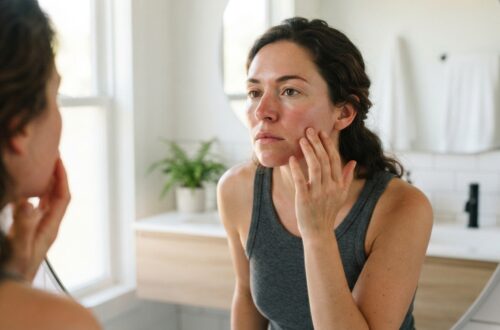
Picture this: you’ve been using a hyaluronic acid serum faithfully for three weeks, and somehow your skin feels tighter and more parched than before you started. You’re not imagining it, and you’re definitely not alone. The question does hyaluronic acid moisturize skin sounds like it should have a simple yes-or-no answer — but the reality is a little more nuanced, and your dermatologist’s waiting room is full of people who got the “yes” without the fine print.
This article is structured as a dermatologist Q&A, because these are genuinely the questions skin specialists field every week. By the end, you’ll know exactly how hyaluronic acid hydrates, when it doesn’t, and how to make it work reliably for your skin type.
Quick Answer: Does Hyaluronic Acid Actually Moisturize Your Skin?
Yes — with an important condition. Hyaluronic acid (HA) is a humectant (an ingredient that attracts and binds water molecules to itself). It draws moisture into the outer layers of the skin, making it feel softer and more supple. However, it does not add moisture on its own; it needs a water source — either damp skin or ambient humidity — and usually an occlusive (a sealing ingredient like a moisturizer or facial oil) layered on top to lock that moisture in place.
Q: What Exactly Is Hyaluronic Acid Doing Inside My Skin?
Think of hyaluronic acid as a sophisticated moisture-routing system rather than a reservoir. In its natural form, HA is a long sugar-chain molecule (called a glycosaminoglycan — essentially a structural carbohydrate your body already makes) that sits in the spaces between your skin cells and collagen fibers. It acts like a dynamic cushion: pulling in surrounding water and redistributing it where the tissue needs it most.
When you apply it topically, it works primarily at the surface and just below. Smaller fragments of HA (low molecular weight) can penetrate slightly deeper into the epidermis (the outermost skin layer), while larger fragments sit on top and create an immediate plumping effect. Neither replaces the natural HA your skin produces, but together they meaningfully boost surface hydration — which is why skin looks smoother and lines appear less pronounced after use. For a fuller picture of what this ingredient does systemically, the complete guide to hyaluronic acid benefits for skin is worth reading alongside this article.
Q: Why Did My Skin Feel Drier After Using a Hyaluronic Acid Serum?
This is probably the most common complaint dermatologists hear about HA, and the explanation is straightforward once you understand humectant chemistry. If you apply hyaluronic acid to dry skin in a dry environment — say, a heated apartment in winter or an air-conditioned office — the molecule will still try to find water to bind. When there isn’t enough in the air, it pulls from the deeper layers of your skin instead, drawing moisture upward and then allowing it to evaporate from the surface. The result? Net dryness.
The fix is two-part: apply HA to slightly damp skin (pat dry but don’t wait until your face is completely dry after cleansing), and always follow with a moisturizer that contains an occlusive ingredient — think shea butter, squalane, or even a light facial oil — to seal everything in before it can escape.
Have you ever noticed that the same serum works beautifully in humid summer months but lets you down in winter? That’s not a coincidence — it’s humidity doing the heavy lifting.
Q: Is Hyaluronic Acid a Moisturizer, or Do I Still Need a Separate Moisturizer?
Technically, hyaluronic acid is a hydrating ingredient, not a complete moisturizer. A well-formulated moisturizer does three jobs: it hydrates (adds water), it occludes (prevents water loss), and it emolliates (smooths and softens). HA handles the first job brilliantly. It does not meaningfully occlude or emolliate on its own.
So for most skin types — especially dry, combination, or mature skin — you do still need a moisturizer over your HA serum. The exception might be very oily skin in a humid climate, where a lightweight HA serum alone provides enough hydration without feeling heavy. But even then, a gel-cream moisturizer with some barrier-supporting ingredients will serve you better long-term.
- Dry skin: HA serum + rich moisturizer with ceramides or shea butter
- Oily/acne-prone skin: HA serum + oil-free gel moisturizer
- Combination skin: HA serum + lightweight lotion, heavier only on dry zones
- Sensitive skin: HA serum + fragrance-free cream with niacinamide or oat extract
Q: Does Hyaluronic Acid Moisturize Differently at Different Molecular Weights?
Yes, and this is one of the most underappreciated nuances in hyaluronic acid skin care. Most premium serums now include multiple molecular weights in a single formula — this is intentional and genuinely useful.
- High molecular weight HA (over 1,000 kDa): stays on the skin surface, forms a breathable film, delivers immediate plumping and smoothness, and helps reduce TEWL (transepidermal water loss — the evaporation of water through the skin).
- Medium molecular weight HA (100–1,000 kDa): penetrates slightly into the upper epidermis for more sustained hydration.
- Low molecular weight HA (under 100 kDa): reaches deeper epidermal layers; some research suggests it supports collagen synthesis and may contribute to the firmer feel that some users associate with HA use. You can read more about that effect in this article on hyaluronic acid for skin tightening.
Insider tip: When a product lists “sodium hyaluronate” rather than “hyaluronic acid,” that’s the salt form of HA — it’s smaller, more stable, and penetrates the skin more effectively. It’s not a lesser ingredient; it’s often the smarter choice for deeper hydration.
Q: Can Hyaluronic Acid Moisturize Mature or Aging Skin Effectively?
Absolutely, and here’s why it’s particularly relevant: as skin ages, it naturally produces less HA. Collagen fibers lose their structural support, and the tissue that once held moisture efficiently becomes less capable of doing so. Topical HA doesn’t replace the lost internal HA molecule-for-molecule, but it does meaningfully restore surface hydration, which visibly reduces the appearance of fine lines and gives skin a more resilient, bouncy quality.
For mature skin specifically, look for formulas that combine HA with peptides (short amino acid chains that signal collagen production) or ceramides (lipid molecules that reinforce the skin’s protective layer). This combination addresses both the hydration deficit and the structural changes happening beneath the surface. Some users also notice a subtle luminosity improvement — a topic explored in depth in this piece on hyaluronic acid for skin brightening.
Q: How Should I Apply Hyaluronic Acid to Get Maximum Moisture?
Application technique makes a measurable difference with HA — more so than with most other actives. Here’s the sequence that dermatologists consistently recommend:
- Cleanse, then don’t fully dry. Leave skin slightly damp — not dripping, but not bone dry either. This gives HA a surface water source to work with immediately.
- Apply HA serum to damp skin. Use 2–4 drops and press gently into the skin rather than rubbing. Pressing encourages absorption; rubbing can cause friction and irritation.
- Wait 30–60 seconds. Let the serum settle before the next step — this gives the humectant time to begin drawing in moisture.
- Seal with a moisturizer. Apply your chosen moisturizer while the HA layer is still slightly tacky. This traps the hydration and prevents evaporation.
- In the morning, finish with SPF. UV exposure degrades HA in the skin — daily sunscreen is genuinely part of your HA strategy, not just a general recommendation.
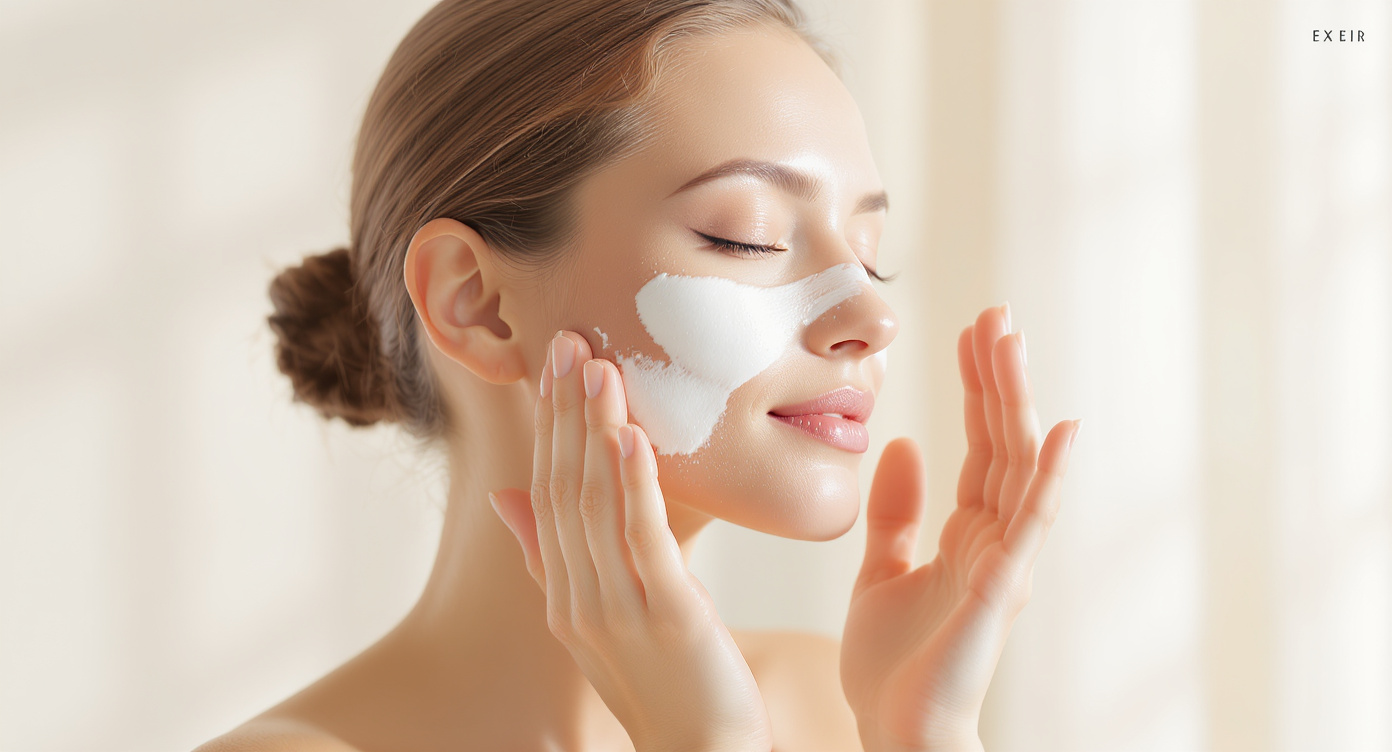
Insider tip: In very dry climates or during winter, mix one drop of your HA serum directly into your moisturizer before applying. This creates a single layer that hydrates and seals simultaneously, eliminating the window where evaporation can occur between steps.
Q: Are There Any Downsides to Using Hyaluronic Acid for Moisturizing?
HA has an excellent safety profile, but honest skincare advice means acknowledging the tradeoffs:
- Pro: Suitable for virtually all skin types, including acne-prone and sensitive skin — it’s non-comedogenic (won’t clog pores) and rarely causes reactions.
- Pro: Works well with most actives, including retinol, vitamin C, and AHAs, making it easy to integrate into existing routines.
- Con: Results are largely surface-level and temporary — HA doesn’t restructure the skin or address the root causes of chronic dryness.
- Con: Can backfire in dry conditions if used without an occlusive follow-up (as discussed above).
- Con: Lower-quality formulas with only high-weight HA and no supporting ingredients may feel good immediately but offer limited lasting benefit.
- Con: Some people with very reactive skin report mild tingling with low molecular weight HA — if this happens, switch to a formula using only sodium hyaluronate.
Worth asking yourself: are you treating the symptom (surface dryness) or also addressing the cause? If your skin barrier is compromised — from over-exfoliation, harsh cleansers, or environmental stress — HA alone won’t fix it. You’ll need barrier-repair ingredients alongside it.
Hyaluronic Acid Moisturizing Products Worth Trying
These picks are tailored specifically to the moisturizing function of HA — chosen for multi-weight formulas, strong occlusive pairings, or barrier-supportive ingredient combinations that help HA do its job properly.
The Inkey List Hyaluronic Acid Serum
Brand: The Inkey List
Key Ingredients: 2% hyaluronic acid (multi-weight), glycerin
A no-frills, budget-friendly serum that uses both high and low molecular weight HA alongside glycerin for layered humectant action. Ideal for learning how HA performs on your skin before investing in pricier formulas.
Neutrogena Hydro Boost Water Gel
Brand: Neutrogena
Key Ingredients: Sodium hyaluronate, dimethicone (light occlusive)
One of the most clinically studied HA moisturizers on the market. The gel texture works brilliantly for oily and combination skin because dimethicone seals hydration without heaviness — solving the “HA needs an occlusive” problem in a single step.
SkinCeuticals Hyaluronic Acid Intensifier
Brand: SkinCeuticals
Key Ingredients: 10% proxylane, licorice root, vitamin B5 (panthenol)
Formulated to support the skin’s own HA synthesis rather than just depositing it topically. Panthenol adds emollient softness, making this a strong choice for mature or chronically dehydrated skin that needs more than surface-level hydration.
La Roche-Posay Toleriane Double Repair Face Moisturizer
Brand: La Roche-Posay
Key Ingredients: Hyaluronic acid, ceramides, niacinamide, glycerin
A dermatologist favorite for sensitive or barrier-compromised skin. The ceramide and HA combination addresses both hydration and barrier repair simultaneously — exactly what’s needed when HA alone isn’t enough.
Drunk Elephant B-Hydra Intensive Hydration Serum
Brand: Drunk Elephant
Key Ingredients: Pro-vitamin B5, sodium hyaluronate, pineapple ceramide
A lightweight serum that pairs sodium hyaluronate with pro-vitamin B5 (which has its own water-binding properties) and a plant-derived ceramide. Great for layering under a richer moisturizer in dry climates or winter routines.
Frequently Asked Questions
Can I use hyaluronic acid every day without it losing effectiveness?
Yes — HA doesn’t cause tolerance or diminishing returns the way some actives (like retinol) can. Daily use is safe and encouraged. In fact, consistent daily application tends to produce better cumulative results than sporadic use, because sustained surface hydration supports healthier cell turnover over time.
Is there a difference between a hyaluronic acid serum and a hyaluronic acid moisturizer?
Yes, and it matters for how you layer your routine. A serum delivers a more concentrated dose of HA in a lighter, fast-absorbing base — it goes on first. A moisturizer with HA combines the humectant with emollients and occlusives in a single step, which is more forgiving if you tend to skip steps. Neither is categorically better; the right choice depends on your skin type and routine complexity.
Does drinking more water make hyaluronic acid work better?
Indirectly, yes. Adequate internal hydration supports overall skin plumpness and helps maintain the water content that HA draws from. But topical HA relies primarily on surface moisture and ambient humidity — drinking water won’t compensate for applying it to completely dry skin in a dry room.
Can hyaluronic acid moisturize skin around the eyes?
It can, and it’s actually one of the gentler options for that area. The under-eye skin is thinner and more prone to irritation from actives, but HA is well-tolerated there. Look for eye creams that include HA alongside peptides or caffeine for a more comprehensive approach to that zone.
Why does my HA serum pill when I apply moisturizer over it?
Pilling usually happens when you apply the next layer before the serum has fully absorbed — or when two silicone-heavy products are layered together. Wait at least 30–60 seconds after your serum before applying moisturizer, and check whether your moisturizer contains high amounts of silicone, which can interfere with absorption of water-based serums beneath it.
Conclusion: Getting the Most Out of Hyaluronic Acid’s Moisturizing Power
So, does hyaluronic acid moisturize skin? Genuinely and effectively — but it works as part of a system, not in isolation. Apply it to damp skin, seal it in with a moisturizer suited to your skin type, and give it a consistent daily routine rather than expecting overnight transformation. The science behind it is solid; the technique is what makes the difference between frustrating and fantastic results.
If you want to go deeper, explore the full spectrum of hyaluronic acid benefits for skin — from hydration to support for collagen — or check out how building a hyaluronic acid skin care routine can tie all these pieces together. You’ve got the knowledge; now it’s just about putting it into practice.