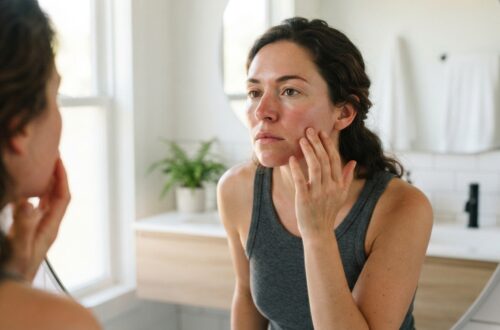
You’ve just started using a hyaluronic acid serum, and a week in, you notice your skin looks a little dull — or maybe slightly uneven in tone. The first thought that creeps in: is this serum doing something it shouldn’t? The question of whether does hyaluronic acid darken skin is one that pops up constantly in skincare forums, and honestly, it deserves a clear, no-fluff answer. Let’s walk through exactly what’s happening, step by step, so you can use this ingredient with full confidence.
Quick Answer: Does Hyaluronic Acid Cause Skin Darkening?
No — hyaluronic acid does not darken skin. It is a hydrating molecule that attracts and retains moisture in the upper layers of the skin. It has no effect on melanin (the pigment responsible for skin color) production, and there is no clinical evidence linking hyaluronic acid to hyperpigmentation or skin darkening of any kind. If you’re noticing tone changes, the cause lies elsewhere.

That said, the confusion is understandable. Skincare reactions can feel mysterious, and when you introduce a new product and something changes, it’s natural to point at the newest addition. But understanding the actual mechanism of hyaluronic acid helps clarify why darkening simply isn’t something this ingredient can do.
What Hyaluronic Acid Actually Does Inside Your Skin
Think of hyaluronic acid (HA) as a microscopic cushion woven into your skin’s deeper layers — a soft, water-retaining scaffold that keeps tissue plump and flexible. It’s a humectant (an ingredient that draws water molecules from the environment and deeper skin layers toward the surface). Your body produces it naturally; the version in your serum is typically lab-synthesized to match what your skin already recognizes.
HA interacts exclusively with water molecules and skin proteins like collagen. It does not interact with melanocytes (the specialized cells that produce melanin and determine your skin’s pigment). Because it has no pathway to influence pigment production — no enzymatic trigger, no UV-response activation — it simply cannot cause darkening. This is a fundamental aspect of how the ingredient is structured at a chemical level.
For a deeper look at how HA behaves once it’s on your face, the guide on applying hyaluronic acid on damp skin explains the absorption process in detail — including why the skin’s moisture level at application time matters more than most people realize.

So Why Does Your Skin Look Darker After Using HA? Common Culprits
This is where things get genuinely useful. If you’ve switched to an HA product and noticed your complexion looking shadowy, dull, or uneven, here are the real explanations — none of which involve the HA itself.
1. Improper Application Leading to Surface Residue
Hyaluronic acid applied to completely dry skin in a low-humidity environment can actually pull moisture from the deeper layers of your skin rather than from the air. This can leave the surface feeling tight and looking slightly dull or grey-toned. It’s not darkening from pigment — it’s a textural and reflective issue caused by mild surface dehydration. Learning about hyaluronic acid and skin dryness can help you understand this counterintuitive effect and how to prevent it.
2. Mixing With the Wrong Ingredients
If your HA serum is layered under or over certain active ingredients — particularly acids like AHAs or BHAs — and you’re not using SPF afterward, you may be creating conditions for post-inflammatory hyperpigmentation (PIH) (darkening that occurs after skin inflammation or irritation). The HA isn’t the villain here; the combination and lack of sun protection are.
3. Oxidation of Other Products in Your Routine
Some products, particularly vitamin C serums, oxidize over time and can leave a yellowish or brownish tint on skin. If you’re layering HA with an older or poorly stored vitamin C product, that discoloration can look like your skin has darkened — but it’s product residue, not pigment change.
4. The Serum Itself Isn’t the Issue — Sun Exposure Is
This one catches people off guard. Many HA serums are used as part of a morning routine. If you’re not following with adequate SPF, any existing dark spots or uneven tone will deepen with UV exposure — and the timing makes HA look like the cause when it’s actually unrelated.
Could Hyaluronic Acid Irritate Skin in a Way That Triggers Darkening?
Here’s a more nuanced question worth addressing: can HA cause irritation that indirectly leads to darkening? In theory, any ingredient can cause a reaction in sensitive individuals, and repeated irritation can trigger PIH — especially in deeper skin tones. However, hyaluronic acid is one of the most non-irritating ingredients in skincare. It’s used in wound care and post-procedure recovery for this exact reason.
If you’re experiencing genuine irritation from an HA product, it’s almost certainly due to preservatives, fragrances, or other actives in the formula — not the HA itself. It’s worth checking whether your skin is reacting to the full ingredient list rather than attributing it to HA alone. You might also want to read about hyaluronic acid and skin sensitivity to understand when and why reactions can occur with HA-based formulas.

Step-by-Step: Using Hyaluronic Acid Without Worrying About Skin Tone Changes
Now that you know HA isn’t the problem, here’s how to use it in a way that actually supports an even, bright complexion rather than accidentally creating conditions for dullness or irritation.
- Cleanse gently — avoid stripping cleansers that leave your skin tight. A slightly dewy surface after cleansing is ideal for HA application.
- Apply HA to damp skin — this is non-negotiable for optimal results. A few drops on slightly moist skin gives the molecule water to work with immediately, rather than drawing from deeper layers.
- Follow with a moisturizer — HA needs to be sealed in. Without an occlusive or emollient layer on top, it can evaporate along with the water it’s holding, leaving skin worse off than before.
- Always apply SPF in the morning — this protects against UV-triggered darkening, which is the actual cause of most tone unevenness people experience while using new skincare products.
- Store your products correctly — keep HA serums away from direct sunlight and heat to prevent formula degradation that could affect performance or cause unexpected skin reactions.
One thing that often gets overlooked: if your HA serum is causing any kind of surface flaking or peeling, that’s a sign something else in the formula is active. Understanding why hyaluronic acid might cause peeling can help you distinguish between normal cell turnover and a genuine product mismatch.
Insider Tips for Getting the Most From Hyaluronic Acid
Insider Tip #1: Not all HA is the same molecular weight. High-molecular-weight HA (the larger molecule) sits on the skin’s surface and creates a plumping, smoothing effect. Low-molecular-weight HA (the smaller molecule) penetrates deeper for longer-lasting hydration. Products with both tend to give the most comprehensive results — look for this on ingredient labels as “sodium hyaluronate” (usually smaller) versus “hyaluronic acid” (usually larger).
Insider Tip #2: If you live in a very dry climate (think: low humidity, heated indoor air in winter), consider applying HA over a light mist rather than just damp skin. This gives the molecule a more generous water source to work with and prevents the paradoxical drying effect that confuses so many people.

Pros and Cons of Hyaluronic Acid for Those Concerned About Skin Tone
- Pro: Completely melanin-neutral — no risk of triggering pigment production regardless of your skin tone or type.
- Pro: Suitable for post-inflammatory hyperpigmentation recovery because it hydrates without irritating.
- Pro: Compatible with brightening ingredients like niacinamide and vitamin C, which actively target dark spots.
- Con: Applied incorrectly (on very dry skin in low humidity), it can temporarily create a dull surface appearance — not darkening, but visually similar to someone who hasn’t slept well.
- Con: Multi-ingredient formulas containing HA may include actives that cause irritation — so the full formula matters, not just the HA.
- Con: If you skip SPF after using HA in your morning routine, any existing dark spots will worsen over time — and HA will get the blame unfairly.
Hyaluronic Acid Products That Work Well for Even Skin Tone Goals
Since HA pairs beautifully with brightening and tone-correcting ingredients, the products below combine HA with actives that genuinely support an even complexion — making them smart picks if skin tone is a concern alongside hydration.
The Ordinary Hyaluronic Acid 2% + B5
Brand: The Ordinary
Key Ingredients: Multi-weight hyaluronic acid, vitamin B5 (panthenol)
Vitamin B5 supports barrier repair, making this a good option for anyone whose skin tone issues stem from a compromised barrier. The multi-weight HA addresses both surface and deeper hydration simultaneously.
La Roche-Posay Hyalu B5 Serum
Brand: La Roche-Posay
Key Ingredients: Hyaluronic acid (two molecular weights), madecassoside, vitamin B5
Madecassoside (a calming botanical extract) makes this ideal for skin prone to redness or PIH, since it soothes while HA hydrates — a combination that supports tone evenness over time.
Paula’s Choice Hyaluronic Acid Booster
Brand: Paula’s Choice
Key Ingredients: Hyaluronic acid, ceramides, panthenol
Ceramides (lipid molecules that reinforce the skin’s protective layer) make this a great choice for those whose uneven tone is linked to a weakened barrier — hydration and structural support in one step.
Neutrogena Hydro Boost Water Gel
Brand: Neutrogena
Key Ingredients: Hyaluronic acid, glycerin
A budget-accessible option with a lightweight gel texture that layers cleanly under SPF — reducing the chance of pilling or formula interaction that could affect skin’s surface appearance.

Frequently Asked Questions
Can hyaluronic acid make dark spots worse?
No. HA has no mechanism to deepen or spread existing hyperpigmentation. However, if your HA routine doesn’t include SPF, UV exposure will darken existing spots — which has nothing to do with HA itself.
Is hyaluronic acid safe for darker skin tones?
Absolutely. HA is one of the most universally safe skincare ingredients across all skin tones. Deeper skin tones are more prone to PIH from irritation, but HA is anti-irritating by nature, making it an excellent choice rather than a risk.
Can I use hyaluronic acid with niacinamide to target uneven tone?
Yes — this is actually a highly recommended combination. Niacinamide (a form of vitamin B3 that inhibits melanin transfer) directly addresses uneven pigmentation, while HA provides the hydration that keeps skin resilient. They work on completely different pathways and complement each other well.
Why does my skin look dull after applying hyaluronic acid?
This is almost always an application issue. If HA is applied to completely dry skin in a low-humidity environment, it draws moisture upward from deeper layers and that moisture can evaporate — leaving a flat, dull surface. Apply to damp skin and seal with a moisturizer to prevent this. The full explanation is in the guide on hyaluronic acid application on damp skin.
Does the concentration of hyaluronic acid in a product affect skin tone?
No. Whether a product contains 0.1% or 2% HA, it has no capacity to influence melanin at any concentration. Higher concentrations may give more noticeable hydration results, but they don’t change the ingredient’s relationship (or lack thereof) with pigmentation.
What should I do if my skin tone seems to change after starting a new HA product?
First, check the full ingredient list for potential irritants — fragrance, alcohol, or strong actives. Second, confirm you’re using SPF daily. Third, consider whether you’re experiencing the damp-application issue described above. If irritation is present, reviewing how HA-based formulas can sometimes affect sensitive skin and what causes peeling with hyaluronic acid products may help you pinpoint the real cause. And if dryness seems to be the underlying problem, understanding the relationship between hyaluronic acid and skin dryness is a useful next step.
The Bottom Line
Hyaluronic acid does not darken skin — not directly, not indirectly, not in any clinically meaningful way. It’s a hydration-focused ingredient that works entirely outside the pigment system. When tone changes appear alongside HA use, the real causes are almost always application errors, missing SPF, formula combinations, or unrelated skin changes that happen to coincide with starting a new product.
The good news? Once you understand how HA actually works, it becomes one of the easiest ingredients to use confidently. Apply it to damp skin, seal it in, wear your SPF, and pair it with proven brightening actives if tone evenness is your goal. That’s the formula for getting everything this ingredient offers — without any of the worry.
Have a look at the product recommendations above, check your current routine for the common culprits we covered, and give your skin the hydration it’s asking for. It’s simpler than the forum threads make it sound.