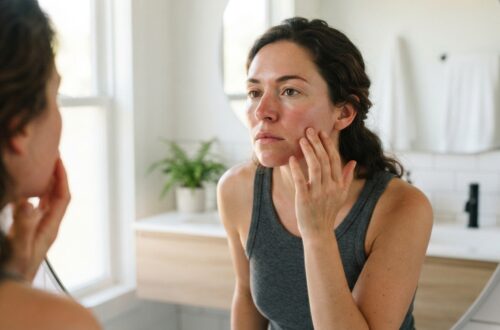
You’ve seen the glowing before-and-afters. Someone swears their hyaluronic acid serum transformed their complexion from dull to luminous, and now you’re wondering: does hyaluronic acid brighten skin, or is that just well-lit photography doing the heavy lifting? It’s a fair question — and the answer is more nuanced than a simple yes or no. HA is one of the most beloved ingredients in modern skincare, but “brightening” means different things to different people, and understanding exactly where hyaluronic acid fits (and where it falls short) will save you from buying the wrong products for your goals.
This article is structured as a comparison: what hyaluronic acid genuinely delivers versus what dedicated brightening ingredients do, so you can build a routine that actually earns that glow.
The Quick Answer: Does Hyaluronic Acid Brighten Skin?
Hyaluronic acid (HA) does not brighten skin in the clinical sense — it doesn’t inhibit melanin production or fade dark spots. However, it can create the appearance of brighter, more radiant skin by deeply hydrating the skin’s surface, which plumps fine lines and gives skin a smoother, more light-reflective texture. Think of it as indirect brightening: when skin is well-hydrated, it looks more alive and luminous, even if underlying pigmentation hasn’t changed.
Hydration-Driven Glow vs. True Brightening: What’s the Difference?
Before comparing ingredients, it helps to define the two very different things people mean when they say “bright skin.”
- Hydration-driven radiance: Skin that looks dewy, plump, and light-reflective because it’s well-moisturized. The surface is smooth, so light bounces off evenly rather than scattering off rough, flaky patches.
- True brightening / pigmentation correction: Reducing melanin (the pigment responsible for dark spots, uneven tone, and post-inflammatory hyperpigmentation) through active ingredients that interrupt the melanin synthesis pathway.
Hyaluronic acid delivers the first. Ingredients like vitamin C, niacinamide, kojic acid, and alpha arbutin deliver the second. These are fundamentally different mechanisms — and conflating them is one of the most common reasons people feel disappointed by their serums.
So the real question isn’t just “does HA brighten?” but rather: what kind of glow are you actually after?
What Hyaluronic Acid Actually Does for Your Complexion
Hyaluronic acid is a humectant (an ingredient that draws water molecules toward itself and holds them in the skin). It exists naturally in your dermis, acting like a cushioning reservoir that keeps tissue supple. When you apply it topically, it works at the skin’s surface and upper layers, pulling in moisture from the environment and from deeper skin layers to keep the outermost layer — the stratum corneum — hydrated and pliable.
For a deeper look at the full range of hyaluronic acid benefits for skin, including its role in barrier support and anti-aging, that pillar article covers the complete picture. Here, we’ll stay focused on the brightness question.
The visible effect of all that hydration? Skin that looks fuller and more even-toned — not because pigmentation has changed, but because dehydrated skin has a tendency to look sallow and dull. Think of it like this: a dried-out sponge has a rough, uneven surface that scatters light in all directions. A hydrated one is smooth and consistent. HA essentially smooths the “surface texture” of your skin so that light reflects more uniformly.
For more on this specific mechanism, the article on whether hyaluronic acid truly moisturizes skin breaks down the difference between surface hydration and deeper moisture retention in useful detail.
HA vs. Vitamin C: The Brightening Showdown
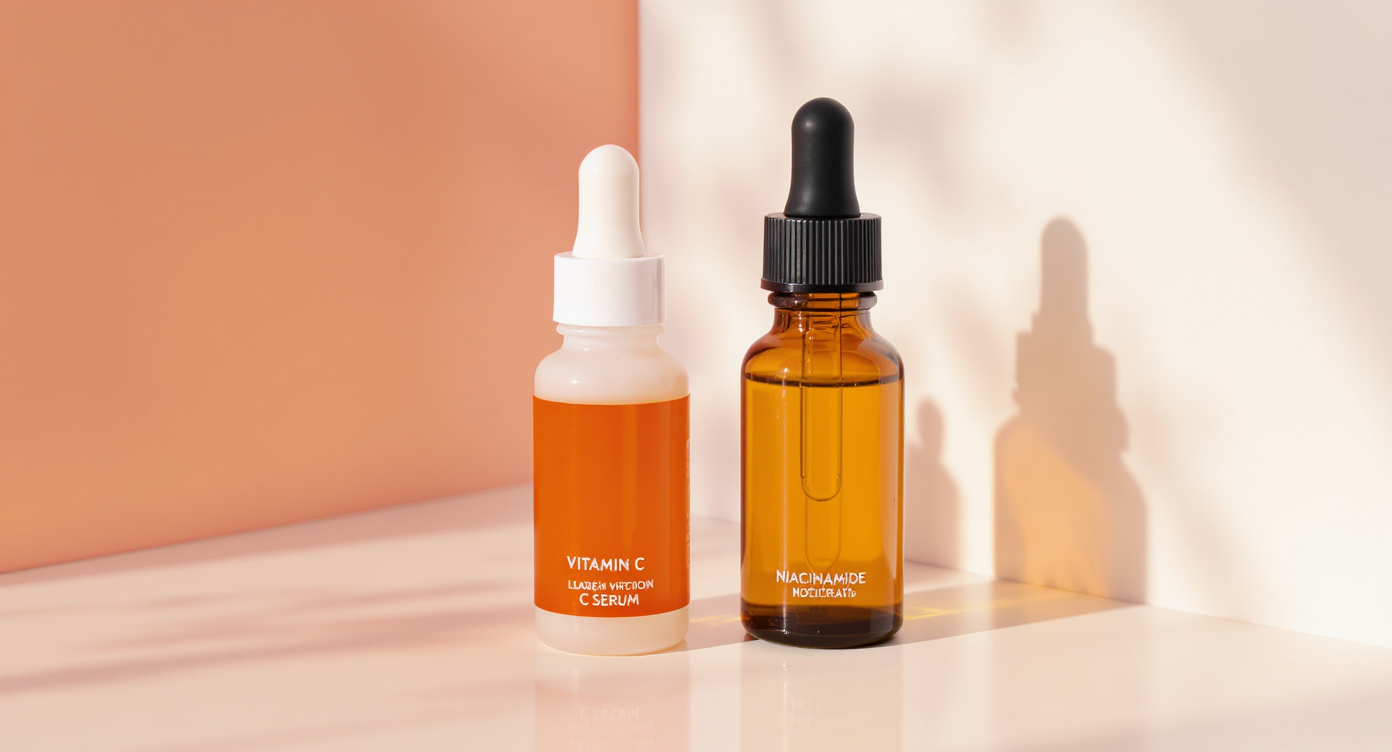
Vitamin C (ascorbic acid) is the gold standard for true skin brightening. It works by inhibiting tyrosinase (the enzyme that triggers melanin production), neutralizing free radicals (unstable molecules that cause oxidative skin damage and uneven tone), and supporting collagen synthesis. The result over time: visibly reduced dark spots, a more even skin tone, and a genuine luminosity that goes beyond surface hydration.
Hyaluronic acid does none of those things. But here’s where the comparison gets interesting: they work beautifully together.
- Vitamin C can be irritating and destabilizing if the skin barrier is compromised or dehydrated.
- HA keeps the skin hydrated and resilient, making it a more hospitable environment for active brighteners to work without causing dryness or sensitivity.
- Many of the best brightening serums on the market combine both for exactly this reason.
Insider tip: If your vitamin C serum is causing flakiness or tightness, adding an HA serum underneath it (applied to damp skin first) can dramatically improve tolerance — and the plumping effect of HA will make the brightening results look even more pronounced.
HA vs. Niacinamide: A Closer Competition
Niacinamide (vitamin B3) is another ingredient often compared to hyaluronic acid because both are gentle, well-tolerated, and widely available. But their mechanisms diverge sharply when it comes to brightness.
Niacinamide works by reducing the transfer of melanosomes (pigment-containing structures) from melanocytes (the cells that produce pigment) to surrounding skin cells. Over 8–12 weeks of consistent use, this genuinely fades hyperpigmentation and evens skin tone. It also has anti-inflammatory properties that help calm post-acne marks.
Hyaluronic acid, by contrast, has no effect on melanin transfer at all. The comparison here is almost apples to oranges: niacinamide is a corrector; HA is a hydrator. That said, niacinamide also has some humectant-like properties, so it provides a degree of hydration alongside its brightening work — giving it a slight edge if you’re choosing between the two for a single-product slot.
That said, the role of hyaluronic acid in a complete skincare routine isn’t about replacing actives like niacinamide — it’s about supporting them. These ingredients aren’t rivals; they’re teammates.
Where HA Genuinely Wins: Texture, Plumpness, and Perceived Radiance
Here’s where the honest pros and cons come in, because HA does have real, visible effects on how bright your skin looks — just not through pigmentation correction.
What HA does well for radiance:
- Plumps fine lines: Dehydration lines (the fine, crepey lines that appear when skin lacks moisture) disappear quickly with consistent HA use, making skin look smoother and more youthful — which reads as “brighter” to most observers.
- Evens surface texture: Rough, flaky patches from dryness scatter light unevenly. HA smooths the surface, improving light reflection.
- Supports barrier function: A healthy, intact skin barrier retains moisture better and is less prone to the redness and irritation that can make skin look uneven and dull. HA contributes to this by keeping the skin’s upper layers hydrated. You can read more about hyaluronic acid and skin firmness to understand how hydration and structural support intersect.
- Enhances active ingredients: Well-hydrated skin absorbs serums more effectively, meaning your vitamin C or niacinamide may actually work better when HA is part of the routine.
What HA cannot do:
- Fade existing dark spots or melasma
- Inhibit melanin production
- Correct post-inflammatory hyperpigmentation
- Replace a dedicated brightening active
Are you looking for a quick improvement in how your skin looks day-to-day, or are you trying to correct a specific pigmentation concern? That distinction will tell you whether HA alone is enough or whether you need to add a true brightener to your lineup.
Building a Routine That Uses Both
If you want the best of both worlds — genuine pigmentation correction and that healthy, hydrated glow — here’s how to layer them effectively:
- Cleanse with a gentle, non-stripping cleanser.
- Apply HA serum to slightly damp skin so it has surface moisture to draw in (applying to completely dry skin in a very low-humidity environment can backfire, pulling moisture from deeper layers instead).
- Follow with your brightening active (vitamin C in the morning, niacinamide morning or evening, retinol at night).
- Seal with moisturizer to lock everything in. Understanding how hyaluronic acid works as a moisturizer helps you choose the right occlusive (a heavier ingredient that seals moisture in) to layer on top.
- SPF in the morning, always. No brightening routine works if UV exposure keeps triggering new pigmentation.
Insider tip: If you’re using a vitamin C serum that contains ferulic acid and vitamin E (a common stabilizing combination), you don’t need to layer HA separately — many of these formulas already include it. Check your ingredient list before doubling up unnecessarily.
Brightening Products That Pair HA with True Brighteners
Rather than choosing between hydration and brightening, these products combine both goals in one formula or are designed to work alongside HA in a layered routine.
SkinCeuticals C E Ferulic
Brand: SkinCeuticals
Key ingredients: 15% L-ascorbic acid, vitamin E, ferulic acid, hyaluronic acid
Why it fits: The gold-standard brightening serum that also includes HA for cushioned delivery. Targets free-radical damage and melanin production while keeping skin hydrated enough to tolerate the high vitamin C concentration.
The Ordinary Niacinamide 10% + Zinc 1%
Brand: The Ordinary
Key ingredients: 10% niacinamide, zinc PCA
Why it fits: A budget-friendly true brightener that pairs seamlessly with a separate HA serum. Use HA first, then layer this on top to address uneven tone and post-acne marks without redundancy.
Paula’s Choice 10% Niacinamide Booster
Brand: Paula’s Choice
Key ingredients: 10% niacinamide, acetyl glucosamine, hyaluronic acid
Why it fits: Combines niacinamide with HA in one step, plus acetyl glucosamine (a sugar-derived compound that further reduces hyperpigmentation). Ideal for those who want a streamlined brightening-plus-hydration routine.
Tatcha The Dewy Skin Cream
Brand: Tatcha
Key ingredients: Hyaluronic acid, Hadasei-3 complex (green tea, rice, algae), Japanese purple rice
Why it fits: A luxurious moisturizer that layers antioxidant-rich botanical extracts with HA for a visibly radiant, plump finish. Not a corrector, but an exceptional choice for the “healthy glow” dimension of brightness.
La Roche-Posay Pure Vitamin C Face Serum
Brand: La Roche-Posay
Key ingredients: 10% pure vitamin C, salicylic acid, neurosensine, hyaluronic acid
Why it fits: A gentler vitamin C option formulated with HA for sensitive skin. Brightens via ascorbic acid while HA keeps the formula comfortable and non-irritating — a great entry point for those new to vitamin C.
Frequently Asked Questions
Can hyaluronic acid fade dark spots?
No. Hyaluronic acid has no ability to reduce existing hyperpigmentation or dark spots. For that, you need ingredients that interrupt melanin production — vitamin C, niacinamide, alpha arbutin, or kojic acid. HA can make the overall skin surface look more even by hydrating it, but it won’t lighten specific spots.
Does using HA make vitamin C more effective?
Indirectly, yes. Well-hydrated skin has a more intact barrier, which means actives like vitamin C are less likely to cause irritation and more likely to be absorbed consistently. Some research also suggests that hydrated skin has improved permeability for certain ingredients, though this varies by formulation.
Is there any form of hyaluronic acid that brightens better than others?
No molecular weight of HA — whether high (surface-level), medium, or low (penetrates deeper) — has brightening properties. Molecular weight affects how deep HA hydrates, not whether it addresses pigmentation. The full breakdown of hyaluronic acid benefits covers molecular weight differences in detail.
How long does it take to see a “brighter” look from HA?
The hydration-driven radiance effect from HA can appear within a few days to a week of consistent use — sometimes even after a single application if your skin was significantly dehydrated. This is very different from true brightening actives, which typically require 8–12 weeks to visibly fade pigmentation.
Should I use HA morning, evening, or both?
Both is ideal. Morning use keeps skin hydrated under makeup and SPF; evening use supports overnight repair. If you’re layering with retinol at night, HA is especially helpful for buffering any dryness retinol can cause. The complete guide to hyaluronic acid in skincare has more on timing and layering.
Can HA cause skin to look dull if used incorrectly?
Potentially, yes — if applied to very dry skin in a low-humidity environment without a moisturizer on top, high-molecular-weight HA can draw moisture upward from deeper skin layers rather than inward from the environment, leaving skin slightly drier than before. Always follow with a moisturizer to seal hydration in. Understanding how hyaluronic acid affects skin firmness and structure can help you use it more strategically.
Conclusion: Use HA for Glow, Not Correction
Hyaluronic acid is genuinely one of the best ingredients for making skin look radiant — but it earns that reputation through hydration and texture improvement, not through any direct action on pigmentation. If your goal is a plumper, dewier, more light-reflective complexion, HA absolutely delivers. If your goal is fading dark spots, evening out melasma, or correcting post-acne marks, you need to bring in a dedicated brightening active alongside it.
The good news? You don’t have to choose. HA and brightening ingredients like vitamin C and niacinamide are among the most compatible pairings in skincare. Together, they address both the structural and pigmentation dimensions of a glowing complexion — and that combination is hard to beat. Start with a quality HA serum, layer your brightener of choice on top, and give it 8–12 weeks of consistent use. The results tend to speak for themselves.