Here’s a thought that might stop you mid-scroll: the very ingredient your oily skin is probably missing is a hydrator. Not a heavy cream, not an oil — a lightweight, fast-absorbing molecule that actually helps regulate how much sebum (your skin’s natural oil) your face pumps out. So, is hyaluronic acid good for oily skin? The short answer is yes — and understanding why can genuinely change how your skin behaves day to day.
Oily skin already produces plenty of lipids, so the instinct to skip moisturizer entirely is understandable. But here’s the thing: oil and water are different things entirely. Your skin can be oily and dehydrated at the same time, and when it is, it often overproduces sebum to compensate. Hyaluronic acid (HA) is a humectant (an ingredient that draws water molecules from the environment and deeper skin layers up to the surface), not an oil — so it adds hydration without adding grease.
The Quick Answer: Does Hyaluronic Acid Suit Oily Skin?
Yes, hyaluronic acid is well-suited to oily skin. It is oil-free, non-comedogenic (meaning it won’t block pores), and lightweight enough to absorb quickly without leaving residue. By restoring the skin’s water balance, it can reduce the dehydration-triggered sebum overproduction that makes oily skin worse. Most oily skin types tolerate HA serums very well, especially water-based formulas applied to damp skin.
Why Oily Skin Still Gets Dehydrated
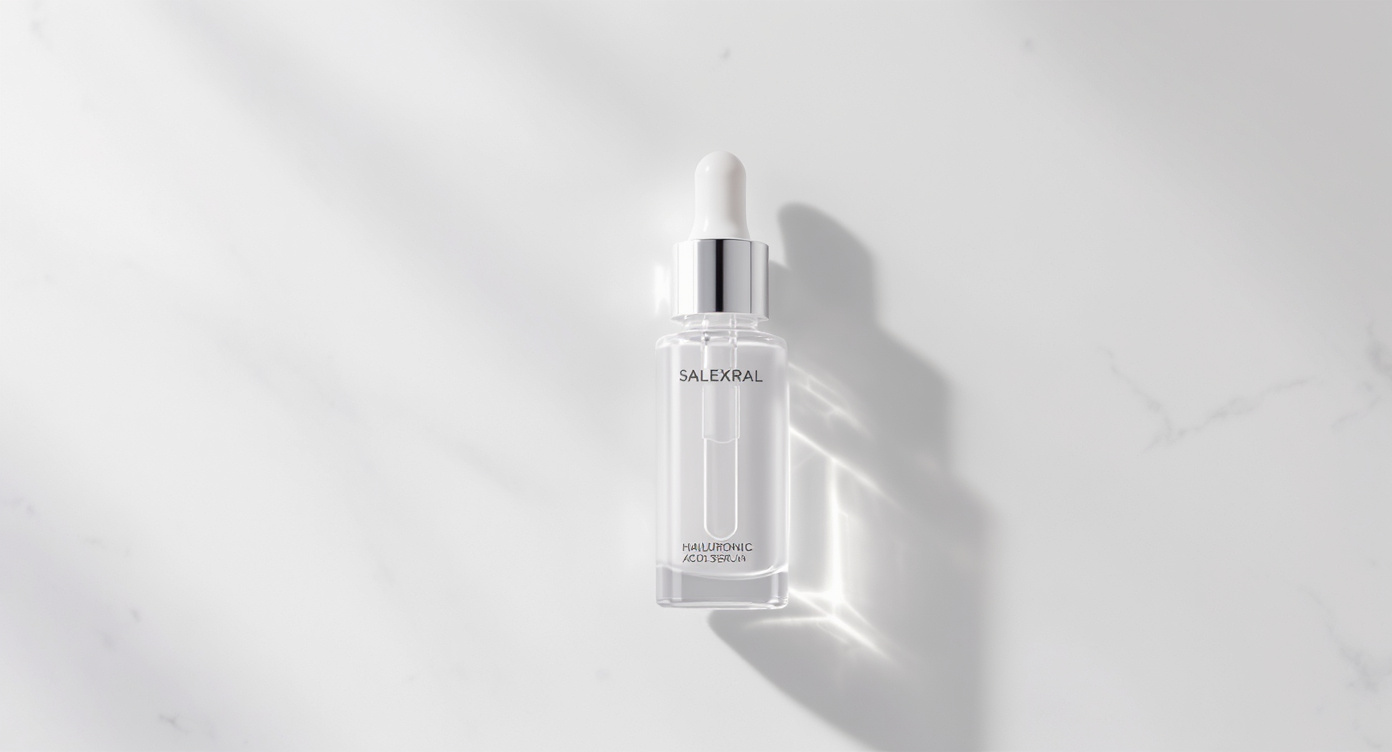
Think of your skin’s oil and water content as two separate tanks. The sebaceous glands (tiny oil-producing structures beneath each pore) fill the oil tank constantly — sometimes too constantly. But the water tank is filled by a completely different system: the skin’s ability to retain moisture through its outer layers. When that water-retention ability is compromised — by harsh cleansers, environmental stress, or over-exfoliation — the water tank runs low even while the oil tank overflows.
This is the condition dermatologists call dehydrated oily skin, and it’s far more common than most people realize. You’ll recognize it by the combination of midday shine and a tight, slightly uncomfortable feeling after cleansing. Your skin looks oily but feels parched underneath. When this happens, your sebaceous glands often respond by producing even more oil, essentially trying to compensate for what the skin perceives as a moisture deficit. It’s a frustrating cycle, and hyaluronic acid is one of the most effective tools for breaking it.
How Hyaluronic Acid Works Differently on Oily Skin
Hyaluronic acid is a polysaccharide (a long-chain sugar molecule) that occurs naturally in your skin, joints, and connective tissue. In skincare, it functions as a humectant — pulling water toward itself and holding it in place within the upper layers of the epidermis (the outermost skin layer). Imagine it less like a sponge and more like a series of tiny reservoirs embedded in your skin, each one quietly holding onto water and releasing it slowly as the skin needs it.
For oily skin specifically, the key advantage is what HA doesn’t do. It doesn’t add any oils or occlusives (ingredients that form a physical barrier to lock in moisture, like petrolatum or heavy butters). It doesn’t sit on top of skin in a way that feels heavy or pore-clogging. A well-formulated HA serum absorbs within seconds and leaves the skin feeling balanced — hydrated but not greasy. That balanced feeling is exactly the signal your sebaceous glands need to dial back oil production over time.
Does that mean you’ll see results overnight? Not quite — but consistent use over two to four weeks tends to show a noticeable improvement in how much oil your skin produces throughout the day.
Fitting Hyaluronic Acid Into Your Oily Skin Routine
Routine placement matters more for oily skin than for any other type, because layering products incorrectly can negate the lightweight benefits HA offers. Here’s how to work it in effectively:
- Cleanse first with a gentle, non-stripping cleanser. Harsh foaming cleansers strip the skin’s natural moisture, worsening dehydration and triggering more oil. A balanced, low-pH cleanser sets the stage for HA to do its job.
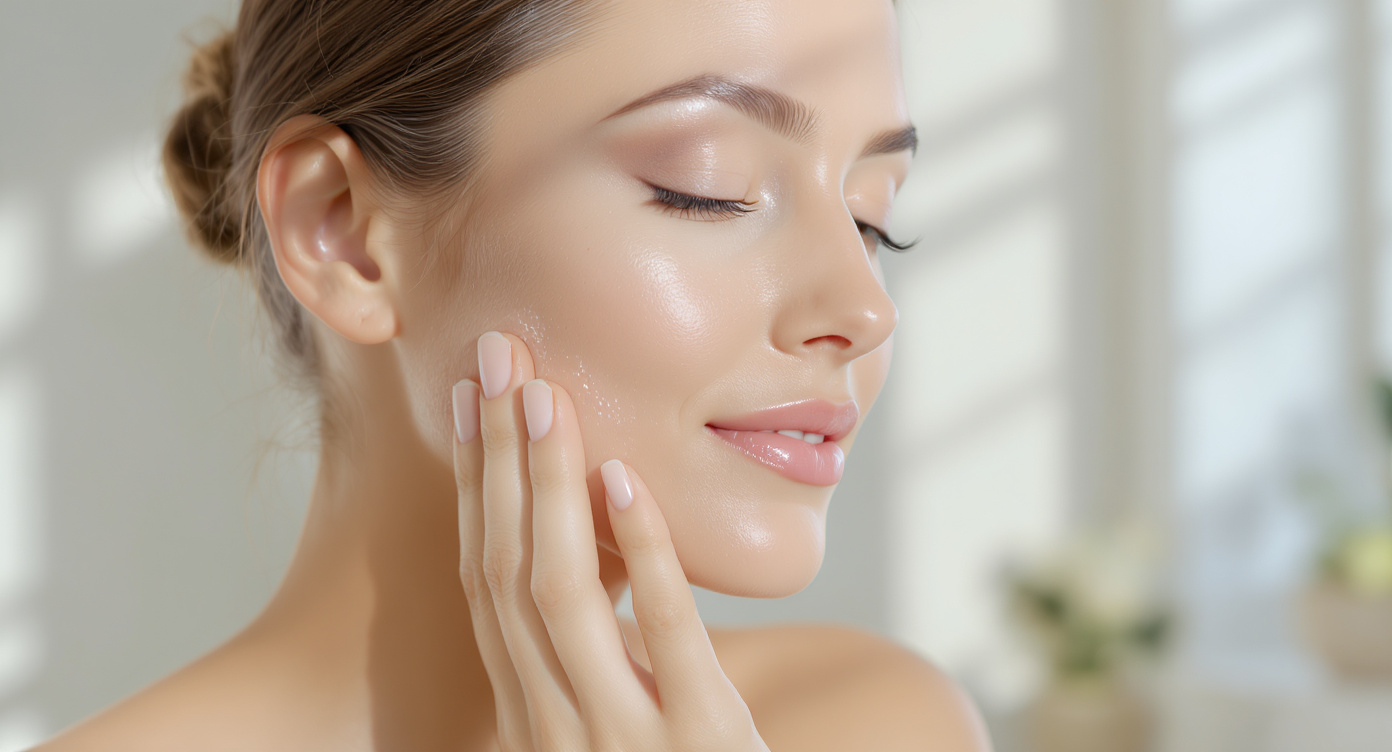
- Apply HA serum to slightly damp skin. This is the single most important tip for oily skin users. Hyaluronic acid needs a water source to draw from — if your skin is completely dry and the air is low-humidity, HA can actually pull moisture from deeper skin layers, which is counterproductive. Lightly misting your face or applying HA immediately after patting (not rubbing) dry solves this entirely.
- Follow with a lightweight, oil-free moisturizer. Yes, even oily skin needs a moisturizer over the HA layer — a thin one. The moisturizer acts as a gentle seal, giving the HA somewhere to work rather than evaporating off the surface. Look for gel-cream textures, water-gel formulas, or anything labeled “oil-free” and “non-comedogenic.”
- Apply SPF in the morning. Many modern SPF formulas for oily skin are themselves mattifying and non-comedogenic, so this step won’t undo your work.
If you also deal with breakouts, it’s worth reading about hyaluronic acid for acne-prone skin — there are a few additional considerations around active breakouts and how HA fits around treatment ingredients like benzoyl peroxide or salicylic acid.
The Molecular Weight Question: Does It Matter for Oily Skin?
You’ll often see HA products advertised as containing “multi-weight” or “multi-molecular” hyaluronic acid. Here’s what that actually means in practice: high-molecular-weight HA (larger molecules) sits on the skin’s surface and provides immediate plumping and a smoothing film effect. Low-molecular-weight HA (smaller molecules) penetrates more deeply into the epidermis, working at a structural level to improve long-term moisture retention.
For oily skin, this distinction is genuinely useful. High-MW HA alone can sometimes leave a very slight film on skin that some oily-skin users find uncomfortable. A formula that combines both weights — or leans toward low-to-medium molecular weight — tends to absorb more completely and feel less “present” on the skin. If you’ve tried a HA product before and found it slightly tacky or heavy, switching to a multi-weight formula or a lower-MW serum is worth trying before writing off the ingredient entirely.
Insider tip: Sodium hyaluronate (the salt form of hyaluronic acid) is actually smaller in molecular size than standard HA and penetrates the skin more efficiently. It’s also more stable in formulas. If you see it listed as an ingredient rather than “hyaluronic acid,” that’s not a downgrade — in many cases, it’s a more effective delivery form, especially for oily skin types who want fast absorption with zero residue.
Honest Pros and Cons of Hyaluronic Acid for Oily Skin
No ingredient is perfect for every person, and building trust means being upfront about the tradeoffs:
- Pro: Completely oil-free and non-comedogenic — won’t clog pores or contribute to breakouts.
- Pro: Lightweight texture absorbs quickly, leaving no greasy residue.
- Pro: Can help reduce excess sebum over time by addressing underlying dehydration.
- Pro: Works well alongside active ingredients like niacinamide, salicylic acid, and retinoids.
- Con: In very dry climates or low-humidity environments, HA can draw moisture from deeper skin layers if not followed by a moisturizer — potentially worsening tightness.
- Con: Some high-MW formulas leave a slight tacky film that oily skin users may dislike.
- Con: Results on sebum control are gradual, not instant — requires consistent use.
- Con: A small number of people experience mild irritation, particularly from formulas with added fragrance or alcohol. (More on this: see hyaluronic acid skin irritation for a full breakdown.)
Pairing Hyaluronic Acid With Other Oily Skin Staples
One of HA’s genuine strengths is how well it plays with other actives. For oily skin, the most effective pairings tend to be:
- Niacinamide: Regulates sebum production directly and minimizes the appearance of pores. Combining niacinamide with HA addresses both the oil-control and hydration sides of the equation simultaneously.
- Salicylic acid (BHA): Oil-soluble and pore-clearing, salicylic acid can be drying when overused. Layering HA afterward helps maintain hydration without interfering with the exfoliation process.
- Retinoids: Known to cause dryness and peeling, especially in early use. HA is one of the best buffer ingredients to use alongside retinol or prescription retinoids — it keeps skin hydrated without blocking the retinoid’s activity.
If you’re navigating a combination of oily and dry zones, the dynamics shift slightly — you can read more about hyaluronic acid for combination skin for guidance on how to adapt your approach. And if sensitivity is part of the picture alongside oiliness, the guide on hyaluronic acid for sensitive skin covers how to choose formulas that minimize reactivity.
Lightweight HA Products Worth Using on Oily Skin
Not all HA products are created equal for oily skin — texture, additional ingredients, and formula weight all matter. Here are five well-regarded options that tend to work particularly well for this skin type:
The Ordinary Hyaluronic Acid 2% + B5
Brand: The Ordinary
Key ingredients: Sodium hyaluronate (multiple molecular weights), vitamin B5 (panthenol)
A no-frills, fast-absorbing serum with a watery texture that disappears into oily skin almost immediately. The multi-weight HA addresses both surface and deeper hydration, while B5 supports the skin barrier without adding any oiliness. Fragrance-free and budget-friendly.
Neutrogena Hydro Boost Water Gel
Brand: Neutrogena
Key ingredients: Hyaluronic acid, glycerin, dimethicone
A gel-cream formula that delivers hydration with a matte-ish finish — ideal for oily skin that needs a moisturizer step but can’t tolerate anything heavy. The water-gel texture absorbs cleanly and controls shine through the day.
Paula’s Choice Hyaluronic Acid Booster
Brand: Paula’s Choice
Key ingredients: Hyaluronic acid, ceramides, panthenol
A concentrated booster designed to be mixed into existing products or used alone. The ceramide addition helps reinforce the skin barrier — particularly useful for oily skin that’s been stripped by over-cleansing or aggressive actives. Fragrance-free and dermatologist-tested.
La Roche-Posay Hyalu B5 Serum
Brand: La Roche-Posay
Key ingredients: Hyaluronic acid (two molecular weights), vitamin B5, madecassoside
A dermatologist-favorite for sensitive and oily skin alike. The dual-weight HA system pairs with madecassoside (a soothing plant extract from centella asiatica) to calm any irritation that might accompany oily, blemish-prone skin. Non-comedogenic and clinically tested.
COSRX Hyaluronic Acid Intensive Cream
Brand: COSRX
Key ingredients: Hyaluronic acid, sodium hyaluronate, niacinamide
A lightweight cream that combines HA with niacinamide — addressing both hydration and sebum regulation in one step. The gel-like consistency feels substantial without being heavy, making it a smart choice for oily skin that wants to consolidate its routine.
Frequently Asked Questions
Will hyaluronic acid make my oily skin look shinier?
No — a well-formulated HA serum absorbs quickly and doesn’t leave an oily or shiny residue. Some high-molecular-weight formulas can leave a very faint dewy finish, but this is different from oily shine and fades quickly. If shininess is a concern, look for matte-finish or water-gel formulations.
Can I skip moisturizer if I use a HA serum?
It’s not recommended, even for oily skin. Hyaluronic acid draws water in but doesn’t seal it there on its own. Without a light moisturizer on top, the water HA attracts can evaporate off the skin surface, especially in low-humidity environments. A thin, oil-free gel moisturizer is all you need — think of it as putting a lid on what the HA has collected.
How long before I notice a difference in oil production?
Most people notice improved skin texture and reduced tightness within a week or two. The effect on sebum production — where consistently hydrated skin gradually produces less oil — typically takes three to four weeks of daily use to become noticeable. Consistency matters more than quantity here.
Is hyaluronic acid safe to use around active pimples?
Generally yes — HA is non-irritating and doesn’t interfere with most acne treatments. In fact, it can help counteract the drying effects of benzoyl peroxide or salicylic acid. For a full picture of how HA interacts with breakout-prone skin, the article on hyaluronic acid for acne-prone skin covers this in detail.
Is hyaluronic acid only useful for dry skin?
This is one of the most persistent myths about the ingredient. While HA is often marketed toward dry skin types, it’s equally beneficial for oily and combination types. You can explore the comparison in detail through the article on hyaluronic acid for dry skin — but the short version is that HA addresses water content, not oil content, making it relevant for virtually every skin type.
Can using too much hyaluronic acid cause problems?
Using HA once or twice daily is the standard recommendation. Overuse is unlikely to cause serious issues, but applying it in very dry conditions without a moisturizer on top can occasionally lead to mild tightness or irritation in sensitive individuals. If you’ve experienced any redness or stinging with HA products, hyaluronic acid skin irritation explains the likely causes and how to address them.
Conclusion: Give Your Oily Skin the Water It’s Actually Missing
If you’ve been avoiding hydrating ingredients because your skin already produces plenty of oil, it might be time to rethink that approach. Hyaluronic acid is one of the few skincare ingredients that genuinely works with oily skin rather than against it — addressing the dehydration that often drives excess sebum production, without adding any oils, heaviness, or pore-clogging risk.
The key is using it correctly: apply it to slightly damp skin, follow with a lightweight oil-free moisturizer, and give it a few weeks to show its full effect. Choose a formula with sodium hyaluronate or multi-weight HA for the cleanest absorption, and pair it with sebum-regulating ingredients like niacinamide for a genuinely balanced routine.
Your next step? Pick one of the product options above that fits your budget and texture preference, and commit to using it consistently for a month. You may find that the ingredient you’d been skipping is exactly the one your skin was asking for all along.