Who told you that sensitive skin and retinol can never get along? That idea is one of the most persistent — and most limiting — myths in skincare. The truth is that the best retinol for sensitive skin does exist, it works, and thousands of people with reactive, redness-prone complexions use it every week without drama. The problem isn’t retinol itself. It’s the wrong formula, the wrong concentration, and the wrong expectations.
This guide breaks down four of the biggest myths that keep sensitive-skin people away from one of the most researched anti-aging ingredients on the planet — and replaces each myth with what dermatologists and the science actually say. You’ll also find specific product picks verified on brand websites, a step-by-step introduction method, and answers to the questions readers ask most.
Quick Answer: What Makes Retinol Safe for Sensitive Skin?
The best retinol for sensitive skin combines a low concentration (0.1–0.3%), an encapsulated or gradual-release delivery system, and barrier-supporting co-ingredients like ceramides, niacinamide, or squalane. Applied two to three nights per week on moisturized skin, most people with sensitive skin can tolerate retinol within four to eight weeks of consistent use. Always patch test first and apply broad-spectrum SPF 30+ every morning.
Myth 1: “Sensitive Skin Can’t Use Retinol at All”
This is the granddaddy of retinol myths, and it stops a lot of people before they even start. Many people with sensitive skin think they can’t use retinol, but that’s simply not true — sensitive skin just requires a bit more of a deft hand and the right product. The distinction matters: retinol irritation is largely a dose-and-delivery problem, not an inherent incompatibility.
Board-certified dermatologist Tiffany Libby explains that retinol can be problematic for sensitive skin because as it accelerates cell turnover, it can lead to dryness, peeling, redness, and irritation, especially in individuals with sensitive skin. But notice what she’s describing — a potential side effect of incorrect use, not an absolute rule. The solution is to change the approach, not abandon the ingredient entirely.
Think of it like introducing a new food to a cautious stomach. You wouldn’t eat a full plate on day one. You’d start with a small taste, wait, and slowly increase. Retinol for sensitive skin works the same way. To understand more about what retinol does for your skin at a foundational level, that deeper dive is worth reading before you start.
Insider tip: If you have sensitive skin, reach for cream-based formulas, which tend to be more gentle because they’re less drying. Also look for encapsulated retinol formulations — these utilize a slow-release technology to ensure that the retinol penetrates gradually, minimizing the risk of irritation while maximizing effectiveness.
Myth 2: “You Need a High Percentage to See Results”
There’s a widespread belief that if your retinol isn’t at 1% or higher, you’re wasting your time. This is not just wrong — it can actively harm sensitive skin. Most dermatologists recommend starting with 0.2–0.3% retinol or encapsulated formulas for sensitive or reactive skin. At those concentrations, you still get the cell-turnover and collagen-supporting benefits that make retinol worth using; you just get them with far less risk of a full-blown inflammatory reaction.
Here’s something most people don’t realize about retinol skin care in general: the percentage on the label tells you the raw concentration, but it doesn’t account for delivery system, vehicle (the base formula), or stabilization. An encapsulated 0.2% retinol that releases slowly and evenly into the skin can outperform a poorly stabilized 1% formula that degrades before it even reaches the dermis (the deeper layer of skin where collagen lives).
Research has shown that encapsulation leads to a significantly prolonged half-life of retinol — approximately nine times longer than that of non-encapsulated retinol — and the encapsulated retinol is released gradually over several hours. That controlled release is precisely what sensitive skin needs: steady, measured exposure rather than a sudden flood of active ingredient.
A useful way to picture it: free retinol hitting your skin all at once is like opening a fire hose at full pressure. Encapsulated retinol is the same water flowing through a slow, steady drip. Same destination — dramatically different experience for your skin.
If you’re already curious about whether retinol is good for your skin in the first place, the evidence is overwhelmingly positive — but only when the formula and concentration match your skin’s current tolerance.
Myth 3: “Retinol Will Permanently Thin or Damage Your Skin”
This one causes real anxiety. People hear “cell turnover” and picture their skin getting thinner and more fragile with every use. The reality is the opposite. Yes, in the short term — especially during the first few weeks — retinol can dry your skin and cause some flaking. That’s a temporary adjustment phase, not permanent damage. And the concern about long-term thinning? That’s a misunderstanding of what retinol actually does at a cellular level.
Retinol works by signaling skin cells to renew faster, which clears away dull, dead surface cells and — over time — stimulates collagen production in the dermis. This is the opposite of thinning. To explore the specific question of whether retinol thins skin, that topic deserves its own careful read. The short version: the initial “purge” period looks alarming but is actually the skin clearing out and rebuilding.
There is one nuance worth knowing: retinol can trigger an inflammatory response, causing conditions like eczema to flare up. If you have a diagnosed skin condition like eczema, rosacea, or psoriasis, it’s worth consulting a dermatologist before starting retinol — not because retinol is inherently dangerous, but because your starting point and product choice may need to be customized. A cosmetic retinol product cannot treat or cure any skin condition.
Also important: retinol is not safe for pregnant people. If you are pregnant or breastfeeding, speak with your doctor before using any retinoid product.
Myth 4: “You Have to Use Retinol Every Night or It Won’t Work”
This myth leads to more abandoned retinol routines than almost anything else. Someone starts using retinol every night, their skin flares up, they decide retinol “doesn’t work for them,” and they stop. The real problem? Frequency.
The key to applying retinol on sensitive skin is to start with a low-percentage formula, measure a pea-size amount, and space out the nights you use it. For the first two to four weeks, applying retinol only every third night allows the skin to develop a tolerance to the drying effects. After that, you can gradually move to every other night, then to nightly use — but only if your skin is genuinely comfortable.
Give it eight to twelve weeks before you judge the results. That timeline is important because retinol works slowly and cumulatively. You’re not going to see a dramatic change in week two. What you’re doing in those first weeks is building tolerance, not wasting time. Does it sometimes cause retinol skin peeling? Yes — some mild flaking in the early weeks is normal. Persistent, painful peeling is not, and is a sign to dial back frequency or concentration.
Insider tip — the “retinol sandwich” method: Apply a thin layer of moisturizer, then a pea-sized amount of retinol, then a thin layer of moisturizer on top. The bottom layer buffers delivery so retinol reaches skin more gradually, and the top layer seals in hydration and supports the barrier overnight. It’s a dependable way to reduce irritation risk during your first weeks and on any night skin feels reactive.
And one more thing that’s easy to forget: retinol can make your skin more sensitive to the sun, so it’s important to use sunscreen with at least SPF 30 every day — even when it looks cloudy. This is non-negotiable when using any retinoid.
5 Facts About Retinol and Sensitive Skin Most People Don’t Know
- Retinol esters are the mildest entry point. Retinol esters — including retinyl acetate, palmitate, and propionate — are typically the mildest and least irritating forms, making them the perfect entryway into the retinol game.
- Fragrance is a hidden irritation trigger. A low-percentage retinol in a fragrance-heavy formula can still cause a reaction. Fragrance-free formulas are a significant advantage for reactive skin.
- Niacinamide is retinol’s best co-pilot. Niacinamide helps support the skin barrier and calm visible sensitivity when used alongside retinol. Many sensitive-skin-friendly retinol products include it for exactly this reason.
- Retinol can actually help acne-prone sensitive skin. Retinol can be great for sensitive, acne-prone skin because it helps to decrease sebum and oil production.
- The “purging” phase is real but temporary. Adapalene (a retinoid) unclogs pores while preventing future breakouts, although you may go through a purging phase and see more pimples come to the surface when you first start using it. The same principle applies to retinol: initial breakouts or flaking are often the skin clearing out, not a sign to stop.
How to Introduce Retinol When Your Skin Is Reactive: A Practical Checklist
Before you open a new retinol product, run through this list. It’s the difference between a smooth introduction and a week of angry, red skin.
- Patch test first. Apply a small amount behind the jawline or on the inner forearm. Wait 24 hours before applying to your full face.
- Start at 0.1–0.25%. Or choose an encapsulated formula where the concentration isn’t disclosed — these are usually very gentle by design.
- Use it on evenings only, two to three nights per week. Never in the morning — retinol degrades in sunlight and increases UV sensitivity.
- Apply to skin that is fully dry after cleansing. Damp skin accelerates absorption and can increase irritation.
- Use a pea-sized amount for your entire face. More product does not mean faster results.
- Follow with a fragrance-free moisturizer. Or try the sandwich method described above.
- Skip retinol on nights when you use exfoliating acids (AHAs/BHAs). Don’t exfoliate on the same night that you use your retinol as this will heighten your skin’s sensitivity.
- Wear SPF 30+ every single morning. No exceptions.
Wondering what to expect as a first-time user? Understanding what retinol does to young skin can also give you a clearer picture of the adjustment timeline and what’s normal versus what’s a warning sign.
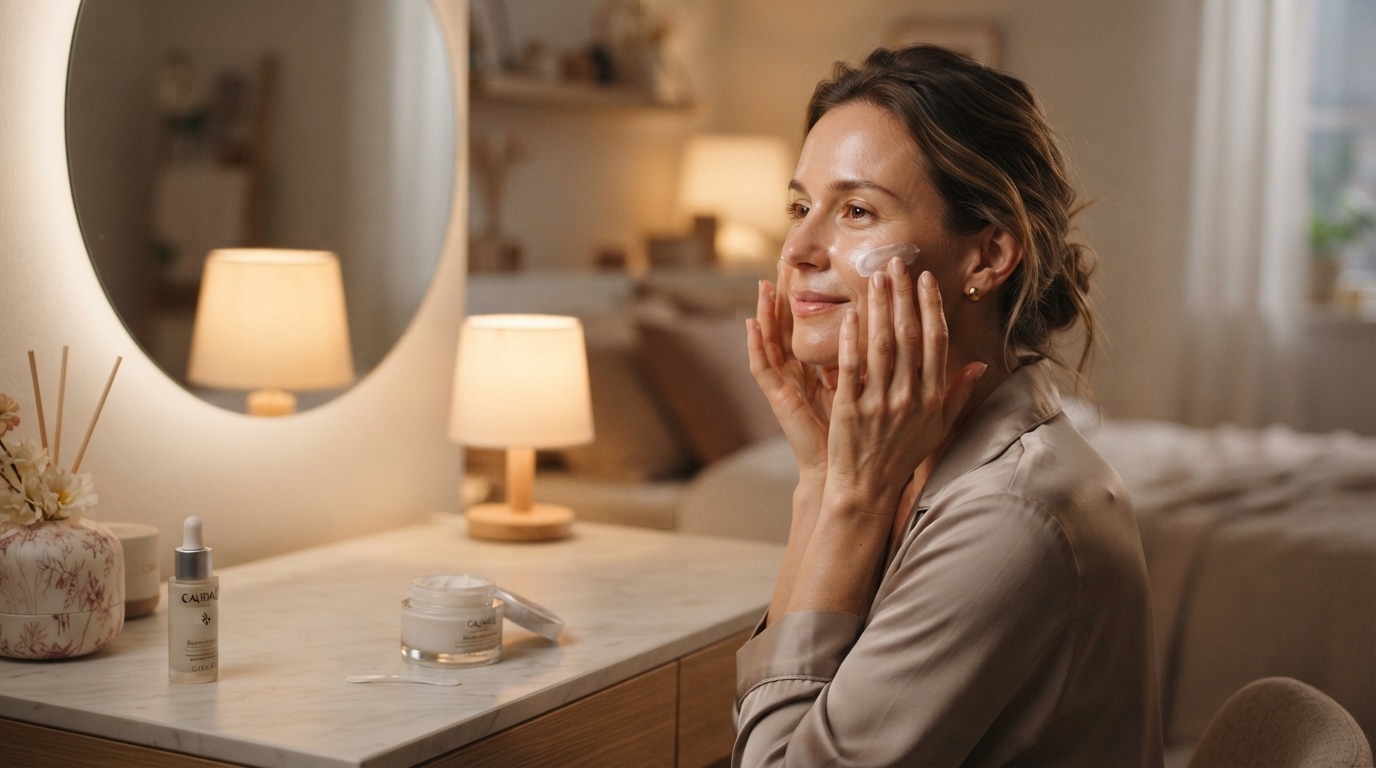
Gentle Picks: Retinol Products Built for Sensitive Skin
Every product below was verified on the brand’s official website. Ingredients and claims reflect the brand’s own descriptions.
Best Overall for Sensitive Skin
CeraVe Skin Renewing Retinol Serum
Brand: CeraVe | Skin Types: All, including sensitive
Key Ingredients (per CeraVe): Encapsulated retinol (helps promote skin’s natural exfoliation process) and hyaluronic acid (essential for maintaining skin’s moisture balance). Also contains niacinamide to soothe and three essential ceramides to help restore the skin’s protective barrier.
Why it fits: CeraVe describes this as a gentle yet effective daily retinol serum that provides a variety of anti-aging benefits. The encapsulation technology releases retinol gradually, which is exactly what reactive skin needs. Fragrance-free and developed with dermatologists.
Best for Anti-Aging + Sensitive Skin
La Roche-Posay Retinol B3 Pure Retinol Serum
Brand: La Roche-Posay | Skin Types: All, formulated for sensitive skin
Key Ingredients (per La Roche-Posay): A unique complex of pure and gradual-release retinol for continuous anti-wrinkle action, combined with vitamin B3 (niacinamide) for optimal efficacy while also being suitable for sensitive skin. Also contains hyaluronic acid and La Roche-Posay Thermal Spring Water, which contains a unique combination of minerals, trace elements, and a high concentration of selenium, a natural antioxidant.
Why it fits: The dual-retinol system (pure + gradual-release) means you get efficacy without the sudden surge that triggers irritation. The 0.3% concentration sits squarely in the dermatologist-recommended range for sensitive skin beginners.
Best Budget Entry-Level Pick
The Ordinary Retinol 0.2% in Squalane
Brand: The Ordinary | Skin Types: Dry skin; best for retinol beginners
Key Ingredients (per The Ordinary): 0.2% retinol in a water-free formula targeting early signs of aging, textural irregularities, and uneven skin tone. Supported with squalane, a moisturizing agent naturally found in your skin that enhances surface-level hydration and helps combat the dryness that can be associated with retinol use. Also contains jojoba seed oil, tomato fruit extract (antioxidant), and rosemary leaf extract.
Why it fits: At 0.2%, this is one of the lowest pure-retinol concentrations available from a mainstream brand. The squalane base is non-irritating and compatible with virtually all skin types, making this a smart, low-risk first step. Fragrance-free.
Best for Post-Acne Marks on Sensitive Skin
CeraVe Resurfacing Retinol Serum
Brand: CeraVe | Skin Types: Sensitive, acne-prone
Key Ingredients (per CeraVe): Encapsulated retinol to help resurface skin, plus licorice root extract to help brighten skin’s appearance. Formulated with three essential ceramides that work together to lock in moisture and help restore the skin’s protective barrier, along with soothing niacinamide.
Why it fits: Designed specifically to reduce the appearance of post-acne marks and minimize pores without stripping the barrier. The encapsulated delivery system and ceramide trio make it a strong choice for sensitive skin that also struggles with congestion. Fragrance-free and non-comedogenic (won’t clog pores).
Honest Pros & Cons of Using Retinol on Sensitive Skin
Before you commit, here’s a balanced look at what you’re signing up for:
Pros:
- Decades of clinical evidence supporting retinol’s ability to reduce fine lines, improve skin texture, and even skin tone
- Low-percentage and encapsulated formulas make it accessible for most reactive skin types
- Retinol is available over-the-counter at a wide range of price points
- Long-term use actually strengthens and thickens the dermis — the opposite of thinning
- Can help with both anti-aging and acne concerns simultaneously
Cons:
- Initial adjustment period (weeks 1–4) may include dryness, mild flaking, or temporary redness
- Requires daily SPF use — without it, you risk undoing the benefits and increasing sun sensitivity
- Results take time — most people need 8–12 weeks to see meaningful change
- Not suitable during pregnancy or breastfeeding without medical guidance
- Can flare certain skin conditions (eczema, rosacea) if introduced too aggressively
Frequently Asked Questions
Can I use retinol if I have rosacea?
This one requires care. Board-certified dermatologist Zenovia Gabriel, MD, notes that people with sensitive skin conditions like rosacea cannot tolerate really strong topicals like retinols. However, that refers to high-strength formulas. Some people with mild rosacea tolerate a very low-percentage retinol (0.1% or below) introduced extremely slowly, under dermatologist supervision. If you have rosacea, consult a dermatologist before starting any retinoid. They can assess your specific situation and recommend whether retinol, a retinol alternative like bakuchiol, or a prescription retinoid is the right path.
What’s the difference between retinol and retinaldehyde for sensitive skin?
Retinaldehyde (also called retinal) is one step closer to the active form of vitamin A (retinoic acid) than retinol, which means it converts more efficiently and may deliver faster results. However, that also means it can be more irritating. For most people starting out with sensitive skin, retinol is the safer first choice. Retinaldehyde is better suited for those who have already built tolerance to retinol and want to step up their routine.
Should I use retinol in the morning or at night?
Always at night for sensitive skin — and for most skin types in general. Retinol breaks down in UV light, reducing its effectiveness. It also increases photosensitivity (your skin’s reaction to sun exposure), which is why applying it in the evening and wearing SPF the next morning is the standard protocol. It’s also important to apply retinol in the evening, especially if your skin tends to be on the more sensitive side.
Can I mix retinol with my moisturizer to make it gentler?
Yes — and this is actually a dermatologist-recommended strategy for beginners. You can mix retinol with your favorite moisturizer as your skin gets used to the product, which makes it a great product to try if you are new to retinol. Diluting the retinol in a moisturizer reduces the concentration that hits your skin at once, similar in effect to the sandwich method. Just be aware that this also reduces potency slightly — which is the whole point when you’re starting out.
How long before I can use retinol every night?
There’s no universal timeline, but a general guide for sensitive skin: start at two to three nights per week for weeks one through four. If your skin is comfortable (mild dryness is okay; redness and burning are not), increase to every other night for weeks five through eight. Daily use, if you reach it, typically takes three to four months of gradual escalation. Skin that gets listened to builds tolerance faster than skin that gets pushed.
Is bakuchiol a good alternative if retinol is still too irritating?
Bakuchiol is a plant-derived ingredient that has shown some retinol-like effects in early studies, including improvements in fine lines and skin tone. It’s much gentler and doesn’t carry the same adjustment period. However, the evidence base for bakuchiol is still far smaller than the decades of research behind retinol. It’s a reasonable bridge ingredient — use it while your skin is recovering, or as a long-term alternative if you genuinely cannot tolerate retinol in any form. Some formulas even combine both, letting bakuchiol buffer retinol’s irritation potential.
Conclusion: Sensitive Skin Deserves Good Skincare, Not Fewer Options
The myth that sensitive skin and retinol are incompatible has kept too many people from one of the most effective skincare ingredients available. The real story is more nuanced: sensitive skin needs the right retinol, the right concentration, and the right introduction method — not a lifetime ban from the ingredient.
Start with a 0.1–0.3% encapsulated formula or a retinol ester. Use it two nights a week, sandwiched between layers of moisturizer. Give it twelve weeks before drawing conclusions. Wear SPF every morning. Patch test before you begin.
If you’re not sure where to begin, the four products above — verified on their brand websites — give you a range of options from budget-friendly to feature-rich. Pick the one that fits your skin’s current needs, commit to the slow-and-steady approach, and let the ingredient do its job.
Have a question about your specific skin type or how retinol fits into your existing routine? Drop it in the comments — we read every one.