Picture your skin in the middle of a brutal winter — tight, flakey at the corners of your nose, dull no matter how much water you drink. You’ve heard hyaluronic acid is the answer, but you’ve also heard it can backfire on dry skin and actually leave it feeling worse. So what’s the truth? Is hyaluronic acid good for dry skin, or is it just another overhyped ingredient that works better for everyone else?
The short answer: yes — with one important condition. Hyaluronic acid (HA) is a humectant (an ingredient that pulls moisture toward itself), and it genuinely excels at hydrating dry skin. But how you apply it, what you layer over it, and which formula you choose determines whether it becomes your skin’s best friend or a source of frustration. Below, we’ve framed the most common questions dermatologists hear about HA and dry skin so you can get clear, practical answers fast.
Quick answer for featured snippet: Hyaluronic acid is beneficial for dry skin because it draws moisture into the outer layers of the skin and temporarily plumps fine lines caused by dehydration. For best results on dry skin, apply it to slightly damp skin and seal it immediately with a moisturizer or facial oil to prevent moisture loss.
What Exactly Does Hyaluronic Acid Do Inside Dry Skin?
Think of the upper layers of your skin like a stack of thin, overlapping roof tiles. When those tiles are well-hydrated, they lie flat, overlap snugly, and keep the elements out. When your skin is dry, those tiles curl at the edges, gaps appear, and your skin loses water faster than it can replenish it. Hyaluronic acid works by slipping into the spaces between those tiles and acting like a cushioning reservoir — it attracts and holds onto water molecules, temporarily restoring the plump, smooth surface that dry skin loses.
HA is naturally produced in your own body — it’s found in connective tissue, joints, and yes, the dermis (the deeper layer of skin beneath what you can see). As we age, or when the skin barrier is compromised by cold air, harsh cleansers, or over-exfoliation, natural HA levels drop. Topical HA can’t fully replace what’s lost at the deeper dermal level, but it makes a meaningful difference in the upper layers where dryness is most visible and uncomfortable.
Molecular weight matters here too. High-molecular-weight HA sits on the surface and creates a smooth, plumping film. Low-molecular-weight HA penetrates more deeply into the epidermis (the outer skin layer) and hydrates from slightly further down. Many well-formulated serums use both, giving you surface-level comfort and slightly deeper hydration simultaneously.
Doesn’t Hyaluronic Acid Pull Moisture OUT of Dry Skin?
This is probably the most common concern dermatologists field — and it’s not entirely wrong. Here’s what happens: HA is a humectant, which means it draws water from wherever it can find it. In an ideal world, it pulls that water from the air around you (a process called hygroscopy — absorbing moisture from the environment). But in low-humidity conditions — think heated indoor air in winter, or arid climates — there isn’t enough ambient moisture for HA to grab. In that scenario, it can pull water from deeper layers of your skin upward and then allow it to evaporate from the surface, leaving your skin feeling tighter than before.
Does this mean you should avoid HA if you have dry skin? Absolutely not. It means you need to seal it in. The fix is straightforward: apply your HA serum while your skin is still slightly damp, then immediately follow with a moisturizer containing occlusives (ingredients that form a physical barrier to prevent water loss — like shea butter, petrolatum, or squalane) and emollients (ingredients that soften and smooth the skin’s surface — like ceramides or fatty acids). That layering system traps the moisture HA has drawn in and stops it from evaporating.
Think of it this way: HA is excellent at filling a bucket with water, but if the bucket has holes in it (a compromised skin barrier), all that water drains out. Your moisturizer is what patches those holes.
How Should Someone With Dry Skin Actually Apply Hyaluronic Acid?
Application technique makes a bigger difference for dry skin than for any other skin type, so this deserves a clear walkthrough.
- Cleanse gently. Use a cream or oil-based cleanser — not a foaming gel — to avoid stripping the little natural oil your skin has.
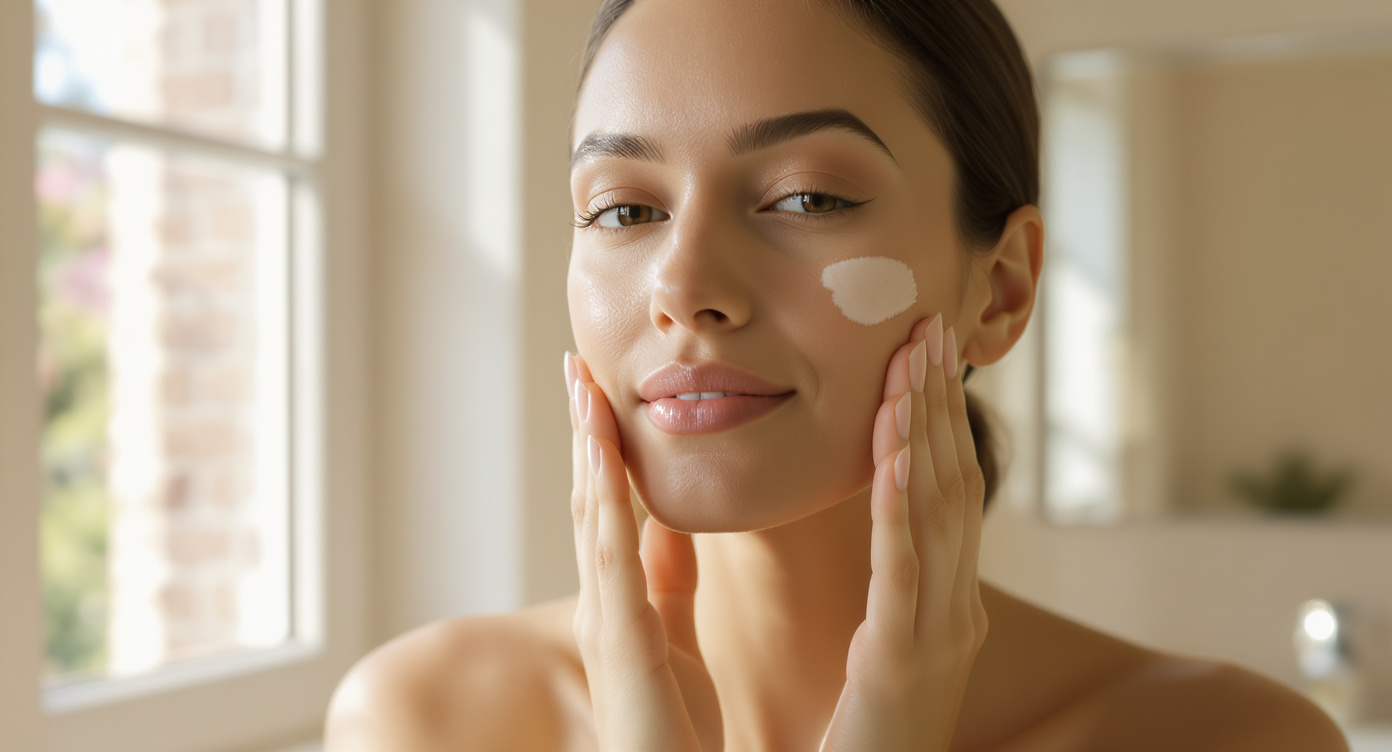
- Don’t fully dry your face. Pat lightly with a towel and leave your skin slightly damp. That residual moisture gives the HA something to work with immediately.
- Apply your HA serum right away. Use 2–4 drops, press gently into the skin, and don’t wait more than 30–60 seconds before the next step.
- Layer a rich moisturizer on top. Look for one with ceramides, glycerin, and at least one occlusive. This is non-negotiable for dry skin.
- In very dry conditions, add a facial oil last. A few drops of squalane or rosehip oil over your moisturizer adds an extra seal.
One thing worth asking yourself: are you using HA in the morning, evening, or both? For dry skin, using it twice daily — especially in the evening when your skin does most of its repair work — can produce noticeably better results than once-a-day use.
Are There Situations Where Hyaluronic Acid Won’t Be Enough for Dry Skin?
Hyaluronic acid addresses dehydration (lack of water in the skin) beautifully, but true dryness is technically a skin type defined by insufficient oil production — and HA alone doesn’t replace oil. If your skin is both dry and dehydrated (which is common), HA handles the water side of the equation while ceramides, fatty acids, and occlusives handle the lipid (oil) side. Relying on HA serum alone without those supporting ingredients is like filling a glass with water but leaving the top open — it won’t stay full for long.
Conditions like eczema (a chronic inflammatory skin condition causing intense dryness and irritation) or ichthyosis (a genetic condition causing very thick, scaly skin) may need prescription treatments alongside HA. And if your skin is extremely reactive, it’s worth knowing that hyaluronic acid skin irritation can occasionally occur, particularly with low-molecular-weight formulas that penetrate deeply into already-inflamed skin.
Similarly, if you have combination skin alongside dry patches, the approach shifts slightly — you can read more about hyaluronic acid for combination skin to understand how to adapt the routine.
Pros and Cons of Hyaluronic Acid for Dry Skin
- Pro: Provides immediate surface hydration and a plumping effect on dry, fine lines.
- Pro: Lightweight texture — won’t feel heavy or greasy even under a rich moisturizer.
- Pro: Compatible with most other active ingredients (retinol, vitamin C, peptides).
- Pro: Fragrance-free formulas are widely available and generally well-tolerated — relevant if you also have sensitive skin alongside dryness.
- Con: Can backfire in low-humidity environments if not sealed with a moisturizer.
- Con: Doesn’t address the oil-deficiency component of dry skin on its own.
- Con: Results are temporary — consistent daily use is required to maintain benefits.
- Con: Some low-molecular-weight formulas may cause mild tingling on very compromised skin.
Does Skin Type Change How HA Performs?
Worth noting: HA behaves differently depending on what it’s working with. If you’re curious how it compares across skin types, hyaluronic acid for oily skin is a different conversation entirely — oily skin benefits from HA’s lightweight hydration without needing the heavy occlusive layer that dry skin requires. And for those dealing with breakouts alongside dryness, understanding hyaluronic acid for acne-prone skin can help you choose formulas that hydrate without triggering congestion.
The core mechanism of HA is the same across all skin types — what changes is the supporting cast of ingredients you pair it with and the richness of your moisturizer step.
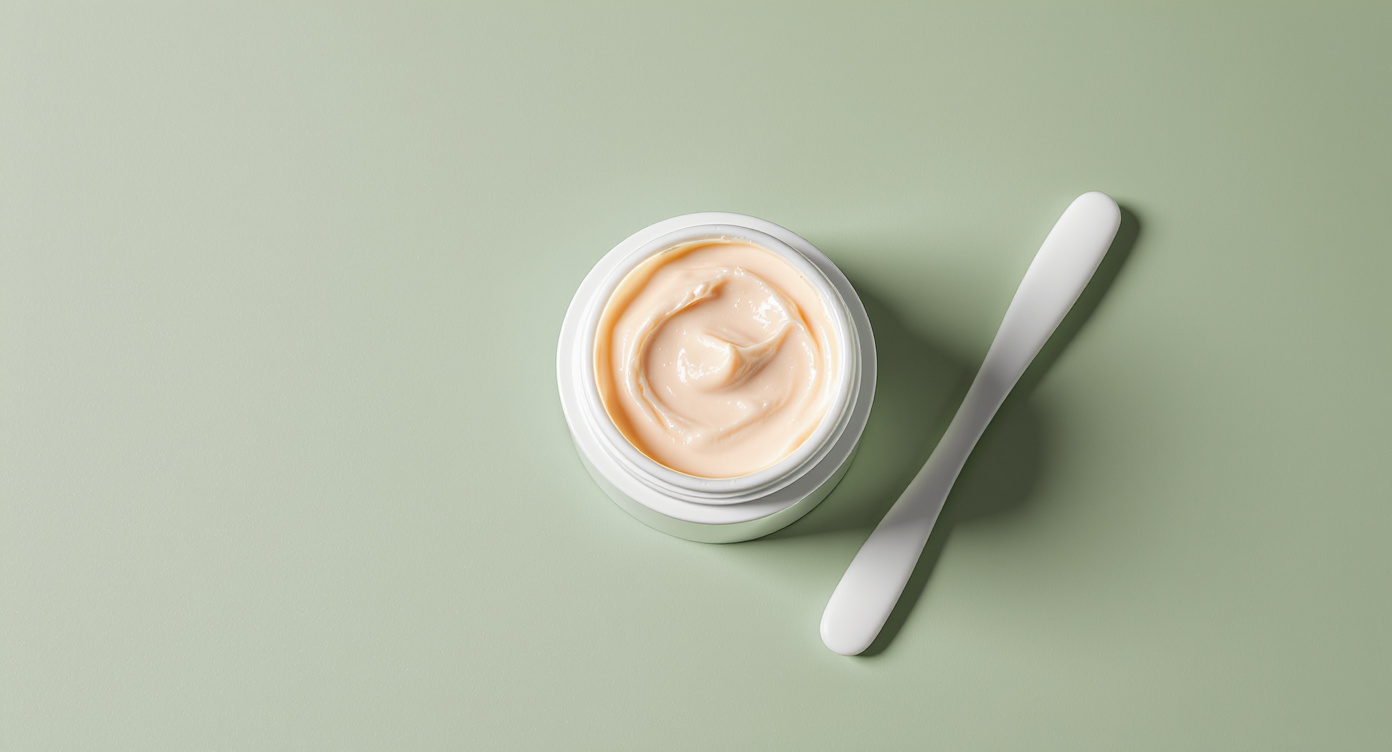
Dermatologist-Recommended Products for Dry Skin Hydration
These picks are selected specifically for dry skin — meaning they either combine HA with barrier-repairing ingredients, use multi-weight HA for deeper hydration, or are formulated to layer beautifully under a rich moisturizer.
CeraVe Hydrating Hyaluronic Acid Serum
Brand: CeraVe
Key Ingredients: Hyaluronic acid (3 molecular weights), ceramides, vitamin B5
Why it fits: The triple-weight HA system hydrates at multiple skin depths, while ceramides simultaneously repair the lipid barrier — addressing both the water and oil deficiency sides of dry skin in one step.
La Roche-Posay Hyalu B5 Serum
Brand: La Roche-Posay
Key Ingredients: High and low molecular weight HA, vitamin B5 (panthenol), madecassoside
Why it fits: Panthenol (a skin-conditioning agent that supports barrier recovery) pairs with dual-weight HA to not only hydrate but actively help repair the skin barrier — ideal if your dry skin is also flaky or tight after cleansing.
Neutrogena Hydro Boost Water Gel
Brand: Neutrogena
Key Ingredients: Purified hyaluronic acid, olive extract
Why it fits: A moisturizer-serum hybrid that works well for mildly dry skin or as a daytime layer under SPF; olive extract adds a light emollient quality that pure HA serums lack.
The Ordinary Hyaluronic Acid 2% + B5
Brand: The Ordinary
Key Ingredients: 2% HA complex (multiple weights), vitamin B5
Why it fits: An affordable, no-frills option that delivers a high concentration of HA without fragrance or unnecessary additives — great for dry skin that’s also reactive, as long as you follow it with a barrier-supporting moisturizer.
First Aid Beauty Ultra Repair Cream
Brand: First Aid Beauty
Key Ingredients: Colloidal oatmeal, shea butter, ceramides, hyaluronic acid
Why it fits: Rather than a standalone serum, this rich moisturizer incorporates HA within a full barrier-repair formula — the occlusives and emollients are already built in, making it a great one-step solution for very dry or winter-stressed skin.
Insider tip: If you’re using a standalone HA serum and your skin still feels tight after moisturizing, try applying a single drop of squalane oil mixed into your moisturizer before applying. Squalane is structurally similar to your skin’s own sebum, so it integrates seamlessly and dramatically improves how well the moisturizer seals in the HA.

Frequently Asked Questions
Can I use hyaluronic acid every day if my skin is chronically dry?
Yes — daily use is actually ideal for chronically dry skin. Unlike exfoliating acids or retinoids, HA doesn’t need rest days. Using it morning and evening gives your skin a consistent reservoir of hydration to draw from, which over time can improve how well your skin retains moisture on its own.
Should I use a HA serum or a HA moisturizer for dry skin?
Both have merit, but for very dry skin, using a dedicated HA serum followed by a separate rich moisturizer typically outperforms a combination product. The layering approach lets you dial up the concentration of HA while still giving your skin the occlusive and emollient coverage it needs. Combination products are more convenient but often compromise on one or the other.
My skin feels tight after applying my HA serum. What’s going wrong?
This is almost always a sealing issue. Either you’re applying HA to completely dry skin (giving it no ambient moisture to work with), or you’re waiting too long before applying your moisturizer. Try misting your face lightly before your serum, and apply your moisturizer within 30 seconds of the serum.
Is there a difference between sodium hyaluronate and hyaluronic acid on an ingredient label?
Sodium hyaluronate is the salt form of hyaluronic acid — it’s smaller in molecular size, which means it can penetrate the skin slightly more easily and is more stable in formulas. For dry skin, both work well; sodium hyaluronate is often the preferred form in serums because of its better absorption profile.
How long before I see results from using HA on dry skin?
Surface-level plumping and reduced tightness can be noticeable within the first few uses. However, meaningful improvement in overall skin texture and dryness typically becomes apparent after 2–4 weeks of consistent daily use, particularly as your skin barrier begins to benefit from the cumulative hydration.
The Bottom Line on Hyaluronic Acid and Dry Skin
Hyaluronic acid is genuinely one of the best ingredients you can add to a dry-skin routine — but it earns that title only when it’s used correctly. Apply it to damp skin, lock it in with a moisturizer rich in ceramides and occlusives, and consider a facial oil on top in harsh conditions. Do that consistently, and HA stops being a source of confusion and starts being the workhorse your dry skin has been waiting for.
If you’re building out a full routine, it’s also worth exploring how HA interacts with your other concerns. Whether you’re managing hyaluronic acid for sensitive skin types or navigating breakouts alongside dryness with hyaluronic acid for acne-prone skin, the principles are similar — it’s all about pairing the right supporting ingredients with HA to get the outcome your specific skin needs.
Ready to start? Pick one of the products above that matches your budget, commit to the damp-skin application technique for two weeks, and pay attention to how your skin responds. That’s the clearest, most honest path to knowing whether HA is the missing piece in your dry-skin routine.