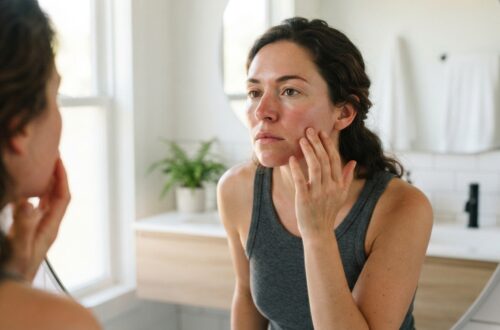
Picture this: you’ve been reading ingredient labels, watching skincare videos, and somewhere between “ceramides” and “retinol,” hyaluronic acid keeps coming up. But is hyaluronic acid good for teenage skin specifically, or is it one of those adult-oriented ingredients that teens should skip? The answer might actually surprise you — and it comes down to understanding what teenage skin actually needs, not just what’s trending.
Teen skin isn’t simply a smaller version of adult skin. It’s hormonally active, often oilier in the T-zone, prone to breakouts, and paradoxically, sometimes dehydrated despite producing plenty of sebum (the skin’s natural oil). That combination creates a unique challenge that hyaluronic acid is genuinely well-suited to address — when used correctly.
Quick Answer: Is Hyaluronic Acid Safe and Effective for Teens?
Yes, hyaluronic acid is generally safe and beneficial for teenage skin. It’s a hydrating ingredient that attracts water into the outer layers of the skin without adding oil or clogging pores. Teens dealing with dehydration, post-acne dryness, or irritation from active treatments can benefit significantly. It works best applied to damp skin, under a lightweight moisturizer, once or twice daily.

How Does Hyaluronic Acid Actually Work on Teen Skin?
Hyaluronic acid (HA) is a glycosaminoglycan — a long-chain sugar molecule — that your skin already produces naturally. Think of it less like a sponge and more like a microscopic reservoir system: HA molecules sit within the dermis (the deeper skin layer) and hold onto water molecules, keeping the tissue plump and cushioned. When skin is dehydrated — meaning it lacks water content, not necessarily oil — those reservoirs run low, and skin can feel tight, look dull, or develop fine surface lines.
What makes HA particularly interesting for teen skin is that it’s non-comedogenic (won’t block pores) and works purely on the hydration side of the skin equation. It doesn’t interfere with oil production, doesn’t contain active exfoliants, and doesn’t carry the hormonal concerns that some other ingredients might. For teens who are already using acne treatments like benzoyl peroxide or salicylic acid — both of which are notoriously drying — hyaluronic acid can act as a counterbalance, restoring moisture without undoing the acne-fighting work.
It’s also worth knowing that sodium hyaluronate in skin care is a slightly different form — it’s the sodium salt of hyaluronic acid, with a smaller molecular size that may penetrate slightly deeper into the skin surface. Many teen-friendly products use this form precisely because it’s lighter and less likely to sit heavily on the skin.

Teen Skin vs. Adult Skin: Why the Comparison Matters
To understand whether HA fits into a teen routine, it helps to contrast teen skin with adult skin directly.
- Oil production: Teens typically produce more sebum due to hormonal surges (androgens, specifically). Adult skin, especially post-30, produces less oil and loses moisture more readily.
- Cell turnover: Teen skin renews itself faster, meaning it’s generally more resilient and recovers quicker from irritation.
- Hydration needs: Teen skin can still be dehydrated — especially if teens are over-washing, using harsh acne cleansers, or living in dry climates — but the type of moisturizer needed differs from an adult’s.
- Sensitivity: Teen skin undergoing hormonal changes can be reactive, making gentle, fragrance-free formulas especially important.
For a broader look at how HA performs across different age groups, the article on hyaluronic acid for young skin covers the full spectrum from childhood through early adulthood in more depth.
The key takeaway from this comparison? Teen skin doesn’t need the heavy emollients (thick, occlusive oils) that adult skin often craves. A lightweight hyaluronic acid serum fits the bill far better than a rich night cream would.
When Should a Teen Actually Use Hyaluronic Acid?
Not every teen needs HA — but many do. Here are the specific situations where it earns its place in a teen routine:
- Using acne treatments that cause dryness: Benzoyl peroxide, salicylic acid, and prescription retinoids all strip moisture. HA replaces that moisture without interfering with the treatment.
- Living in a dry or air-conditioned environment: Low-humidity environments pull moisture from the skin continuously. HA helps buffer that loss.
- Skin that feels tight after cleansing: That tight, slightly uncomfortable feeling after washing your face is a classic sign of dehydration — even if your skin also feels oily minutes later.
- Post-breakout recovery: After a blemish heals, the surrounding skin is often dry and slightly inflamed. HA can soothe and rehydrate that area gently.
- Combination skin management: Teens with oily T-zones and dry cheeks can use HA to hydrate the drier areas without making oilier zones worse.
Here’s something worth considering: if your skin feels oily but also looks dull or feels slightly rough, you might be dealing with dehydrated oily skin — a combination that confuses a lot of teens. The skin overproduces oil partly in response to dehydration, trying to compensate. Introducing a lightweight hydrator like HA can actually help calm that cycle over time.

Where Does Hyaluronic Acid Fit in a Teen’s Skincare Routine?
Routine placement matters more than most people realize. If you apply HA incorrectly, you can actually end up with skin that feels drier than before — not because the ingredient is bad, but because of how it interacts with the environment.
For a full breakdown of layering logic, the guide on what step hyaluronic acid takes in a skincare routine covers the sequencing in detail. The short version for teens: HA goes on after cleansing and toning, while the skin is still slightly damp, and before your moisturizer. The damp skin is important — HA draws moisture from its surroundings, so if there’s no moisture nearby, it can pull from the deeper layers of your skin instead, which is counterproductive.
A simple teen-friendly routine with HA:
- Gentle, non-stripping cleanser
- Optional: toner or mist (leave skin slightly damp)
- Hyaluronic acid serum (2-3 drops, pressed gently into skin)
- Lightweight gel moisturizer or lotion
- SPF 30+ sunscreen (morning only)
Insider tip: In very dry climates or during winter, apply your HA serum and then immediately follow with moisturizer — don’t let it sit on skin for more than 30 seconds before sealing it in. Without that seal, the HA can evaporate moisture off the surface rather than locking it in.
Honest Pros and Cons of Hyaluronic Acid for Teens
Here’s a straightforward look at the tradeoffs, because no ingredient is perfect for everyone:
- Pro: Non-comedogenic and oil-free — won’t cause breakouts
- Pro: Fragrance-free options are widely available and affordable
- Pro: Pairs well with acne treatments without reducing their effectiveness
- Pro: Suitable for all skin types, including sensitive and combination
- Con: Can backfire in very dry environments if not sealed with a moisturizer
- Con: Doesn’t address acne, hyperpigmentation, or texture on its own — it’s purely a hydrator
- Con: Some formulas include added fragrances or alcohols that can irritate reactive teen skin — always check the full ingredient list
- Con: Oral supplements are a different story — hyaluronic acid supplements for skin are generally not recommended for teens without medical guidance, as the research is primarily in adults

Teen-Appropriate Hyaluronic Acid Products Worth Trying
These picks are chosen specifically for teen skin concerns: lightweight textures, clean formulas, no unnecessary fragrance, and price points that don’t require a part-time job.
The Ordinary Hyaluronic Acid 2% + B5
Brand: The Ordinary
Key Ingredients: Multi-weight hyaluronic acid, vitamin B5 (panthenol)
A cult-favorite for good reason. Multiple molecular weights of HA mean it hydrates at different depths of the skin surface, and B5 adds extra soothing support. Fragrance-free, affordable, and lightweight enough for oily teen skin.
Neutrogena Hydro Boost Water Gel
Brand: Neutrogena
Key Ingredients: Hyaluronic acid, glycerin
A gel-cream moisturizer that delivers HA and glycerin (another humectant) in a texture that feels almost weightless. Great for teens who want to skip the separate serum step and get their HA and moisturizer in one product.
CeraVe Hydrating Hyaluronic Acid Serum
Brand: CeraVe
Key Ingredients: Hyaluronic acid, vitamin B5, ceramides
CeraVe’s dermatologist-developed formula adds ceramides (lipids that reinforce the outer skin layer) alongside HA, making it especially useful for teens whose skin barrier has been compromised by acne treatments or over-washing.
La Roche-Posay Hyalu B5 Serum
Brand: La Roche-Posay
Key Ingredients: Two forms of hyaluronic acid, madecassoside, vitamin B5
Formulated for sensitive and reactive skin, this serum combines HA with madecassoside (a plant extract with calming properties), making it ideal for teens dealing with redness or irritation alongside dehydration.
e.l.f. Holy Hydration! Face Cream
Brand: e.l.f. Cosmetics
Key Ingredients: Hyaluronic acid, peptides, niacinamide
An ultra-budget-friendly option that punches above its price point. The added niacinamide (a form of vitamin B3 that helps regulate oil and calm redness) makes this especially well-suited to acne-prone teen skin that also needs hydration.

Frequently Asked Questions About Hyaluronic Acid for Teen Skin
Can hyaluronic acid make teenage acne worse?
No — hyaluronic acid is non-comedogenic and doesn’t influence oil production or bacterial activity. It won’t cause or worsen acne. In fact, by maintaining the skin’s moisture balance, it may reduce the irritation that can make acne look angrier than it is.
Is there an age minimum for using hyaluronic acid?
There’s no established minimum age, and HA is considered one of the gentlest skincare ingredients available. That said, most dermatologists suggest keeping any skincare routine minimal before the mid-teen years — a simple cleanser, moisturizer, and SPF is usually sufficient for younger teens.
Does hyaluronic acid help with oily skin, or is it only for dry skin?
It helps with dehydration, which can affect any skin type — including oily skin. Oily skin and dehydrated skin are not mutually exclusive. A lightweight HA serum or gel won’t add oil; it adds water, which is what dehydrated skin actually needs regardless of how much sebum it produces.
Should teens use hyaluronic acid morning, night, or both?
Both is fine. Morning use under SPF and a light moisturizer helps maintain hydration throughout the day. Evening use after cleansing supports overnight skin repair. If you’re only going to use it once, nighttime is slightly preferable since there’s no environmental exposure to contend with.
What’s the difference between using a serum versus a moisturizer that contains hyaluronic acid?
A dedicated HA serum typically has a higher concentration and a thinner texture, making it better at delivering the ingredient quickly. A moisturizer with HA built in is more convenient and works well for teens who prefer a minimal routine. Either approach is valid — the key is sealing the hydration with something occlusive (even a light lotion) afterward.
Conclusion: Should Teens Add Hyaluronic Acid to Their Routine?
The short answer is a confident yes — with a few caveats. Hyaluronic acid is one of the most teen-appropriate skincare ingredients out there precisely because it does one job cleanly: it hydrates without adding oil, without disrupting acne treatments, and without introducing unnecessary chemicals to developing skin. It’s not a miracle worker, and it won’t clear breakouts or fade dark spots on its own, but as part of a simple, consistent routine, it fills a genuine gap.
If you’re a teen — or a parent helping a teen build their first real skincare routine — start with a fragrance-free formula, apply it to damp skin, and always follow it with a lightweight moisturizer. That’s really all there is to it. And if you want to understand how this ingredient fits into the bigger picture of skin health, exploring topics like sodium hyaluronate in skincare and proper hyaluronic acid routine placement will give you a much more complete picture.
Your next step: check the moisturizer or serum you’re already using. There’s a good chance it already contains HA or hyaluronic acid formulated for younger skin — in which case, you’re already ahead of the curve.